Small Bedroom Decor Ideas: How to Make a Tiny Room Feel Calm, Bright and Bigger
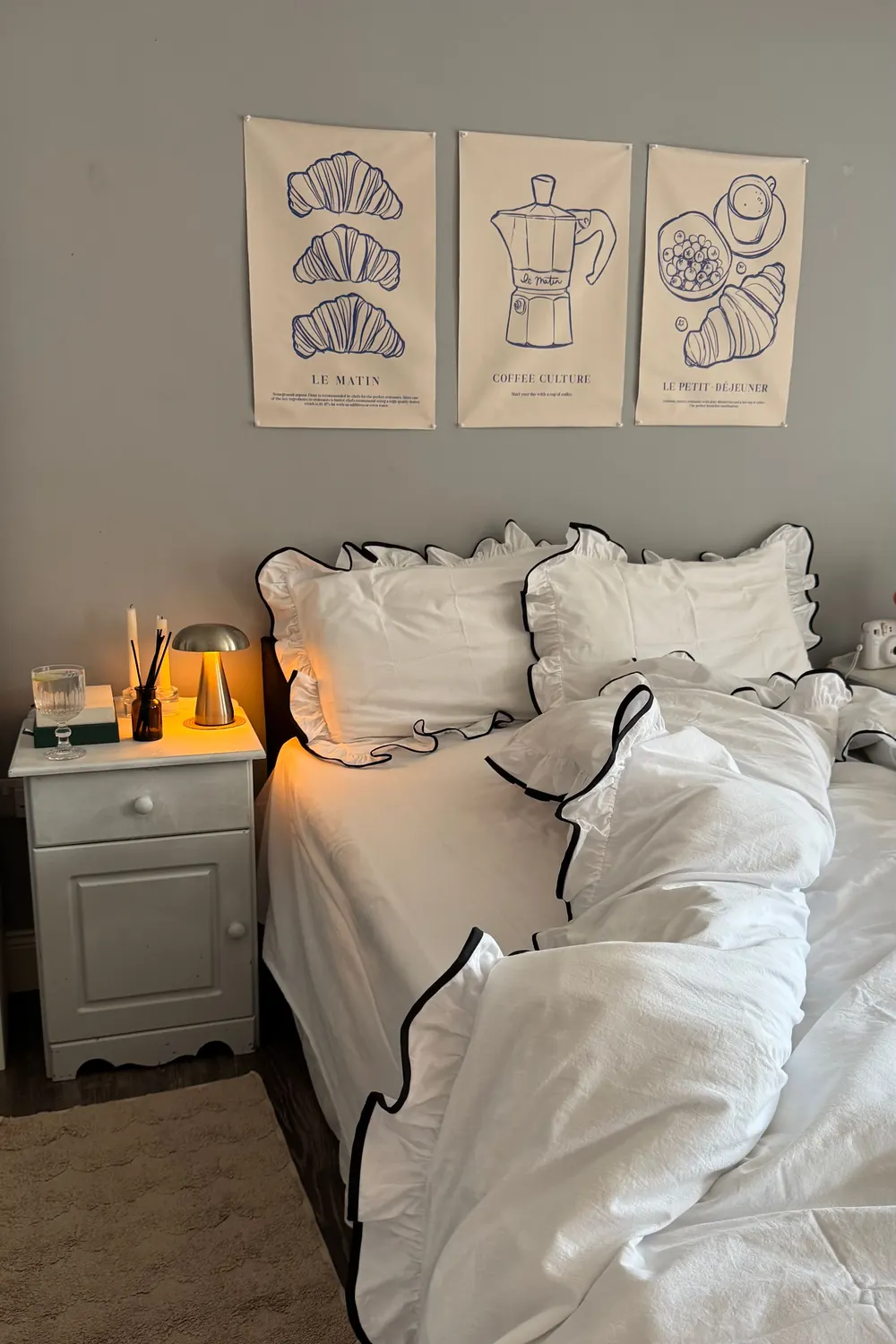
Small bedroom decor ideas from a designer's playbook: measured furniture clearances, the right bed size for a 10x10 room, wall-mounted lighting, vertical storage and a calm colour scheme that makes a tiny bedroom feel bigger.
Most small bedrooms do not fail because they are small. They fail because a standard furniture package (queen bed, two deep nightstands, a six-drawer dresser) was squeezed into a room that measures 9 by 10 feet, and every walkway shrank to the width of a hip. Fix the floor plan first and the decorating becomes easy. The ideas below follow the order an interior designer works in: measure, place the bed, solve storage, then add light, colour and texture.
Start with a scaled floor plan
Before buying a single cushion, draw the room on graph paper or in a free planner such as Floorplanner, at a scale of 1 square to 6 inches. Mark the door swing, the window, radiators and every power outlet. These fixed points decide where the bed can go far more than taste does.
Aim for these clearances, which come from standard ergonomic guidance used by kitchen and bedroom planners:
- 30 inches (76 cm) for a main walkway, such as door to bed.
- 24 inches (60 cm) along the side of the bed you get in on.
- 36 inches (90 cm) in front of a dresser so the drawers open fully while you stand.
If you cannot meet all three, sacrifice a nightstand before you sacrifice the walkway. A room you can move through freely always feels larger than a room with more furniture in it.
Choose the right bed size for the room
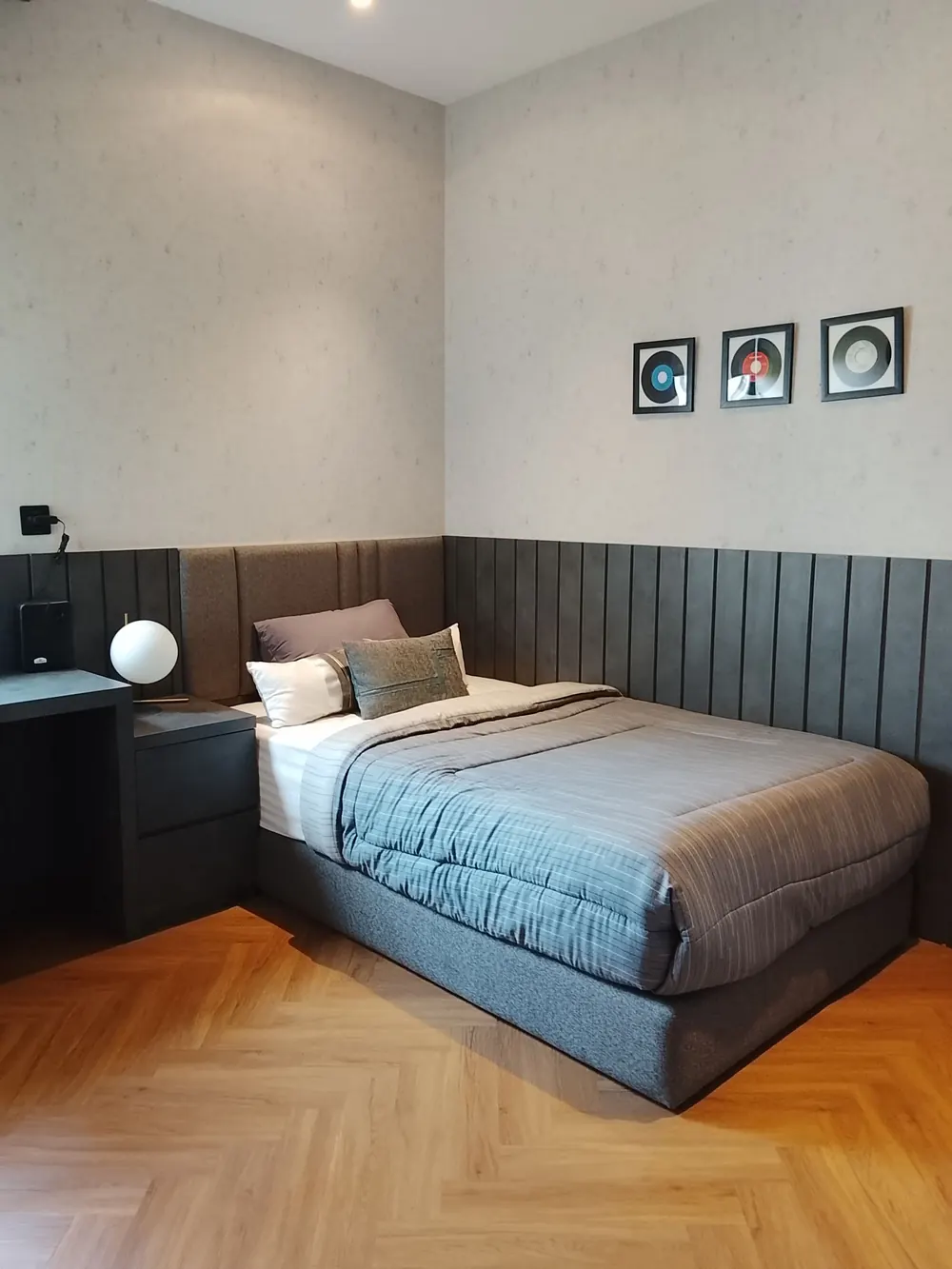
The bed is roughly a third of the floor in a small bedroom, so a few inches matter. A full (double) bed is 54 inches wide, a queen 60 inches. In a room under 10 feet wide, that extra half-foot is often the difference between a 24-inch walkway and an awkward shuffle. Couples who want a queen can still make it work by pushing one long side against the wall, which frees an entire walkway.
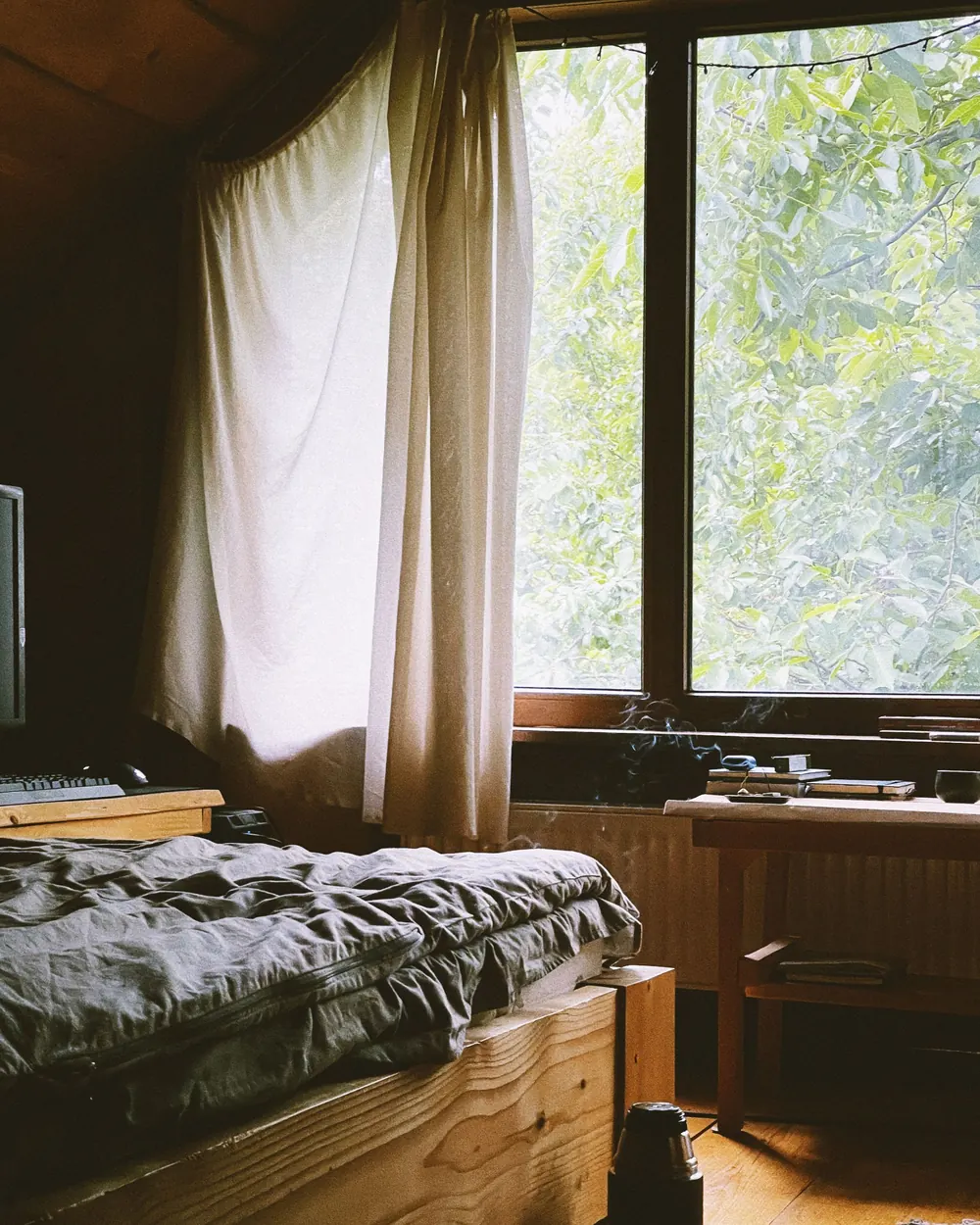
Pick a frame with legs, a low headboard and no bulky footboard. Seeing floor underneath the bed tricks the eye into reading the room as bigger, and a footboard adds a hard visual stop exactly where you need open space.
Put the bed on the right wall
The best wall for the headboard is usually the one you see first from the door. It anchors the view, makes the room look composed and keeps the bed out of the circulation path. Avoid placing the headboard under a window if you can: it blocks light, creates a draught at night and leaves nowhere to hang curtains properly.
In very narrow rooms, a daybed or a bed tucked into an alcove can work like a sofa during the day. Dress it with a fitted cover, a long bolster and two or three cushions so it reads as seating, not an unmade bed.
Swap bulky nightstands for floating shelves
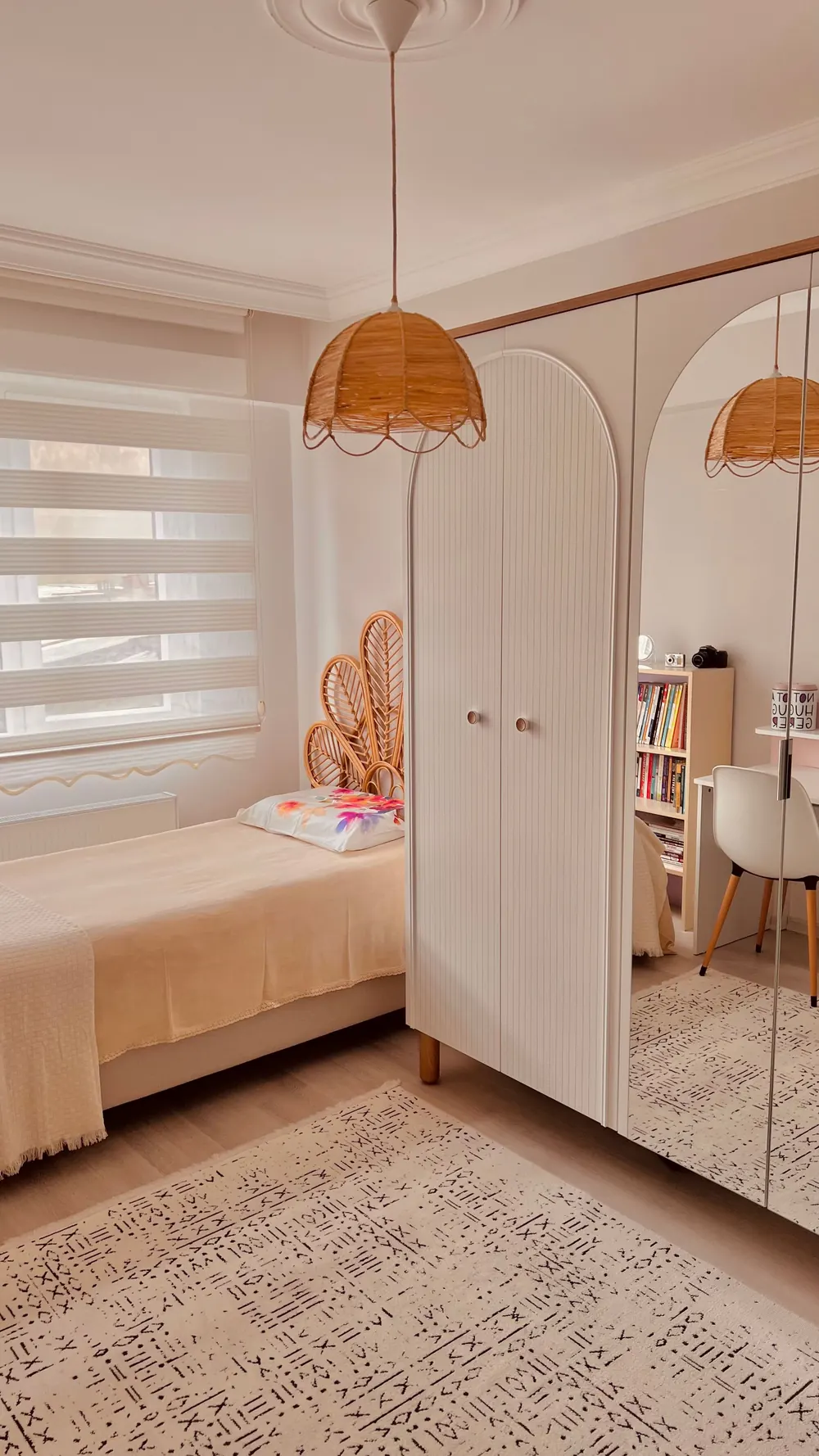
A standard nightstand is 18 to 24 inches deep. A wall-mounted shelf or floating drawer can be 10 to 12 inches deep and still hold a phone, a glass of water and a book. Mount it at mattress height (usually 24 to 28 inches from the floor) so it is within reach lying down. Because the floor underneath stays visible, the corner beside the bed feels lighter.
If the room is shared, a narrow C-shaped side table that slides over the mattress edge is another space saver, and it doubles as a laptop stand.
Light the room from the walls, not the floor
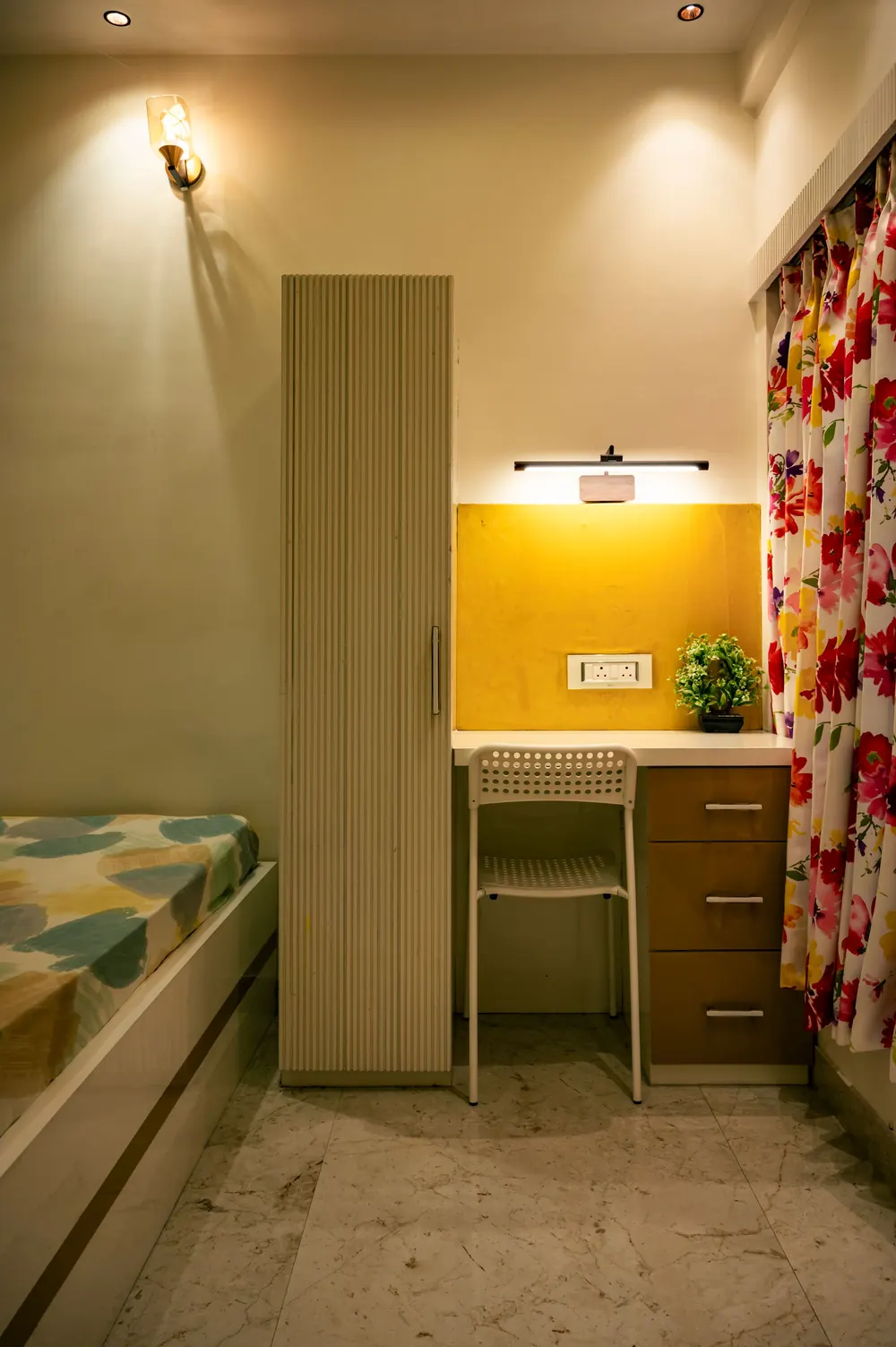
Floor lamps and big table lamps eat surface area. Plug-in wall sconces with a swing arm free up the nightstand entirely and give a focused reading light. Choose warm white bulbs at 2700K for evenings, and look for a fitting with an on-off switch on the cord if you are renting and cannot hard-wire.
Layer three types of light, the way lighting designers describe them:
- Ambient: a ceiling fixture with a soft shade or a flush mount, on a dimmer if possible.
- Task: sconces or a clip light for reading.
- Accent: a small lamp on a shelf or an LED strip behind the headboard for a glow.
A small room with light coming from several directions has fewer dark corners, and dark corners are what make rooms feel cramped.
Use colour to blur the edges
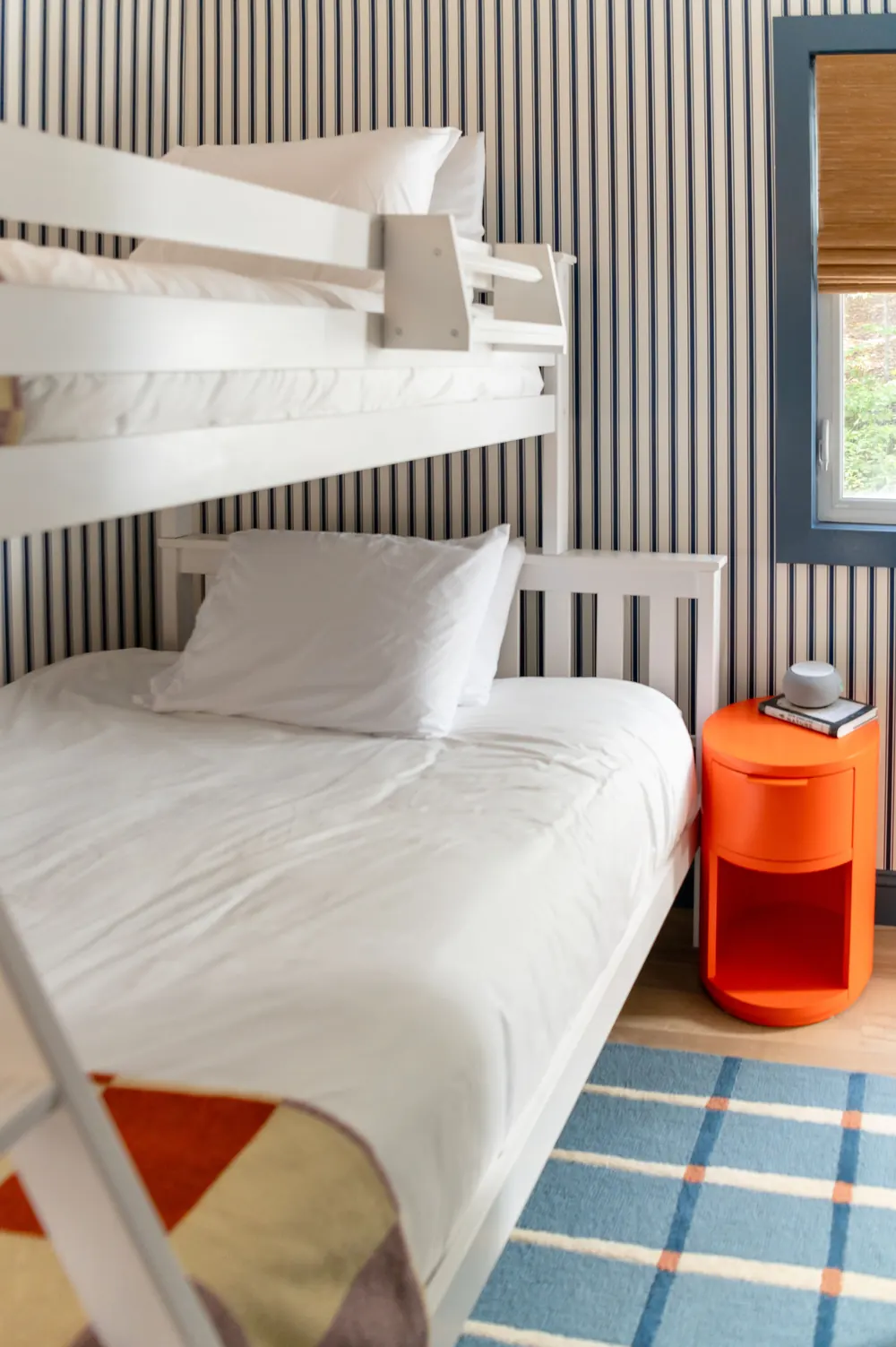
Pale colours do reflect more light, but what really makes a small bedroom feel bigger is low contrast. When walls, trim and curtains sit in the same family, the eye cannot find the corners and the room seems to extend. Try a warm white or soft greige on the walls with trim painted the same colour in an eggshell or satin finish.
Paint companies publish a Light Reflectance Value (LRV) for every shade; anything above 70 bounces plenty of light in a north-facing room. If you love colour, go the other way and paint everything, including the ceiling, a deep muted tone such as olive, ink blue or clay. Colour drenching makes a small bedroom feel intentional and cocooning rather than small.
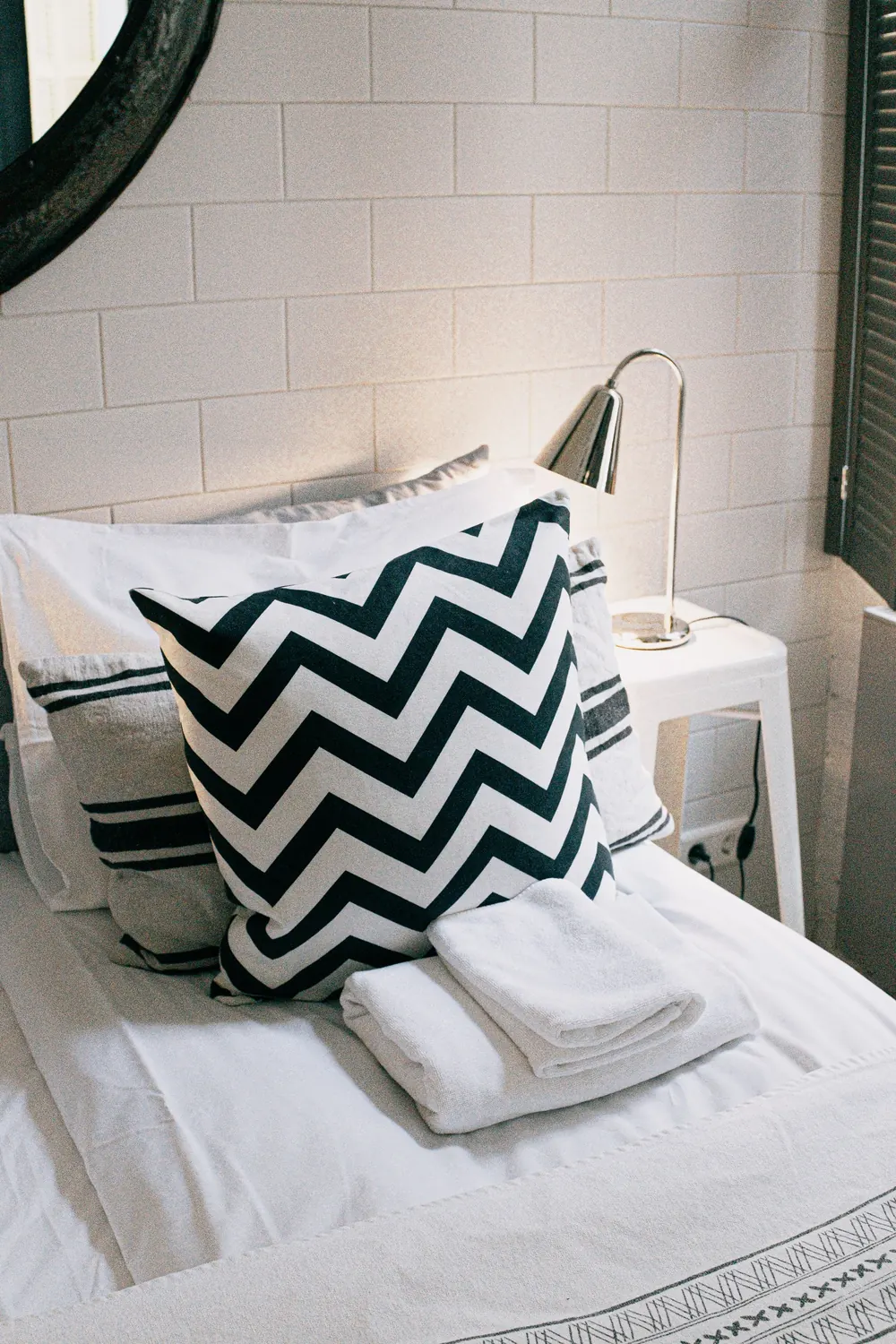
Go vertical with storage
Floor area is scarce; wall height usually is not. A tall, shallow wardrobe or a run of built-in cupboards to the ceiling holds more than two short units and looks calmer. Sliding or mirrored doors save the swing space a hinged door needs, roughly the door's width in an arc.
Other vertical wins:
- A shelf running above the door frame for books or baskets.
- Pegboard or a row of Shaker pegs for tomorrow's outfit, bags and hats.
- A tall, narrow chest of drawers (five or six drawers, 30 inches wide) instead of a long low dresser.
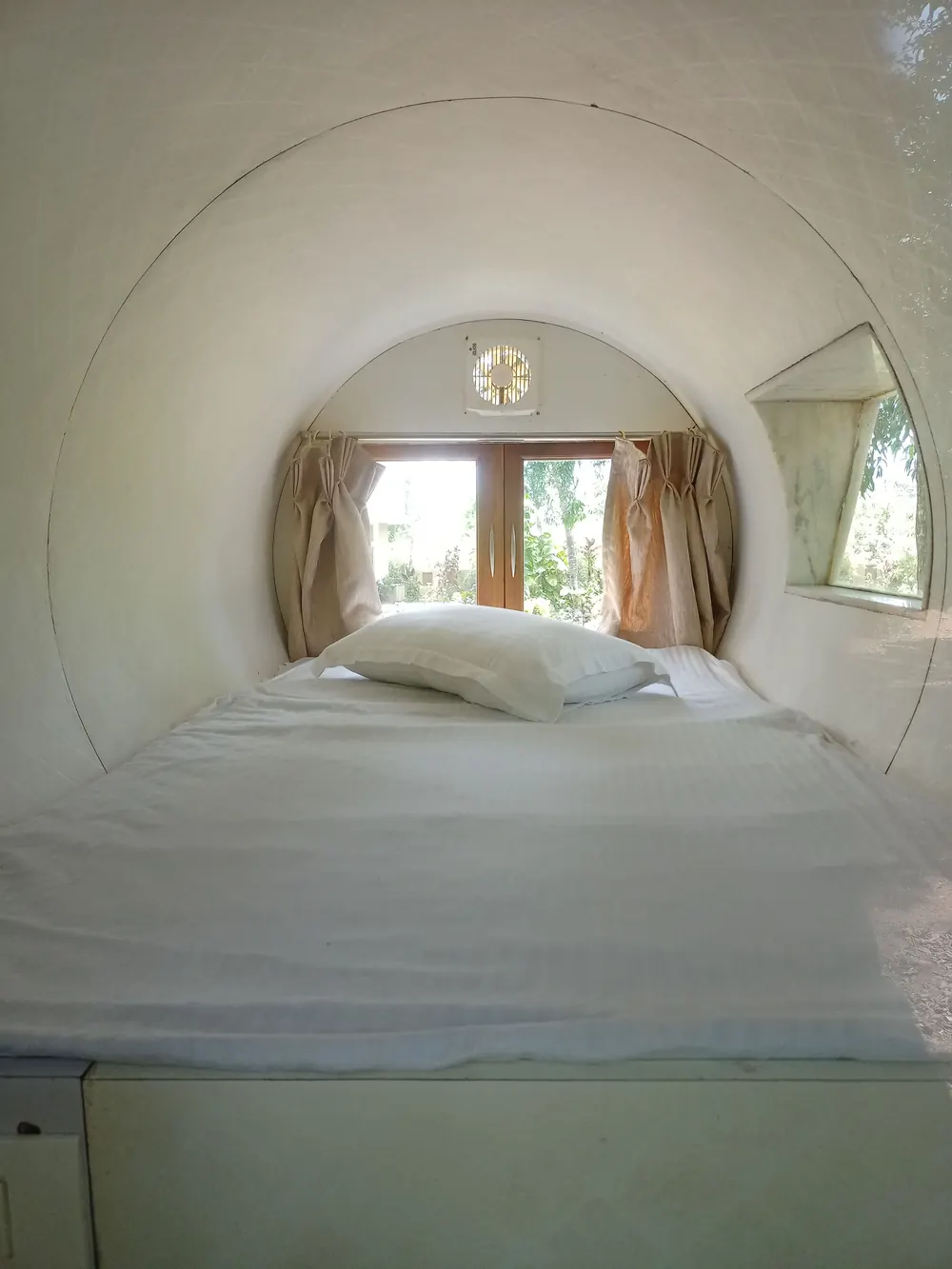
Make the space under the bed work
An under-bed area of a full-size bed is about 20 square feet, which is a small closet. A storage bed with drawers or a hydraulic lift-up base keeps out-of-season clothing, spare bedding and luggage off the floor. If you keep your existing frame, bed risers plus lidded under-bed boxes on wheels do the same job. Keep the bed skirt or valance tailored so the storage stays hidden.
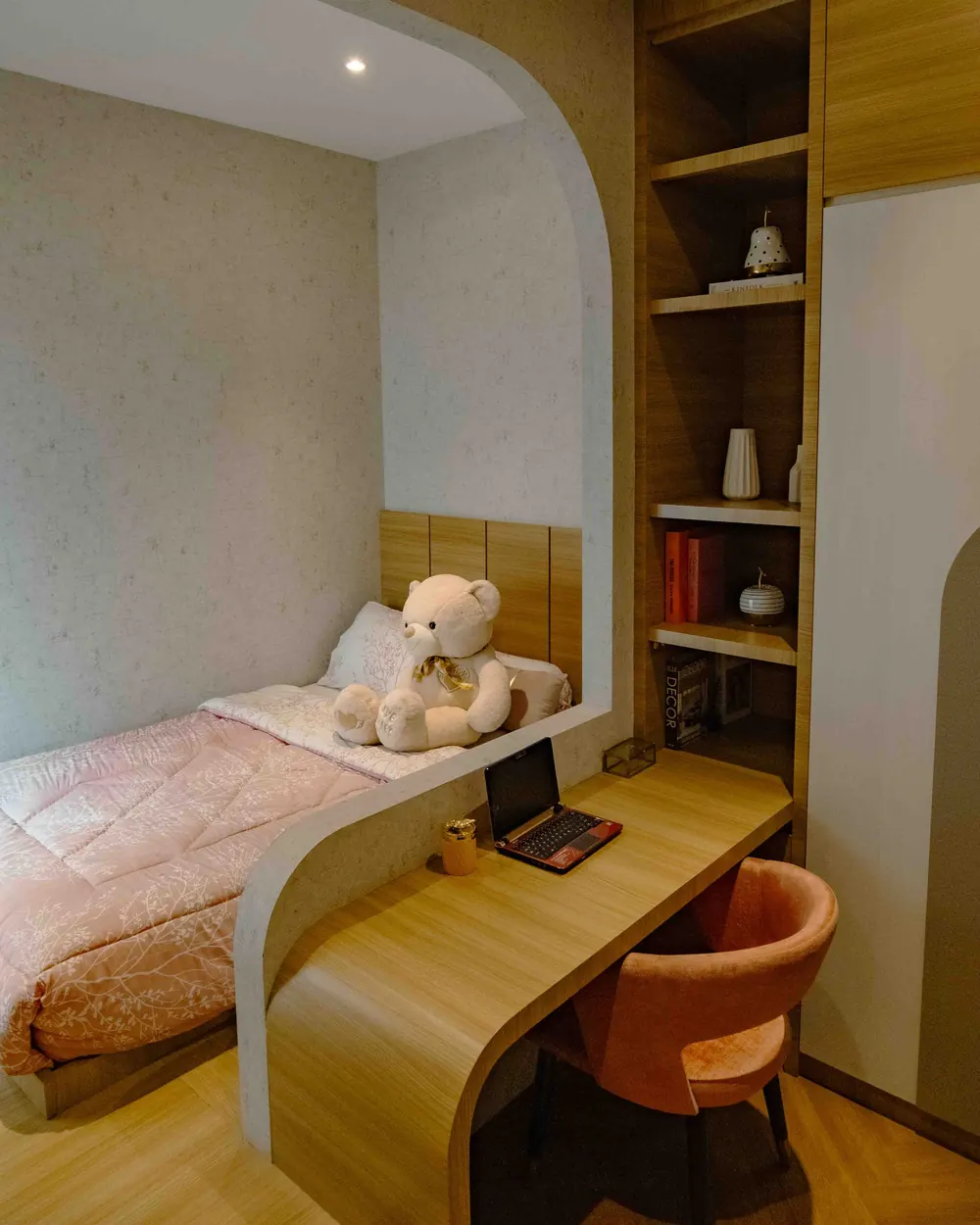
Hang curtains high and wide
This is the cheapest trick in the designer's book. Mount the curtain rod 4 to 6 inches below the ceiling (or halfway between the window frame and the ceiling in tall rooms) and extend it 8 to 12 inches beyond each side of the frame. When open, the curtains stack against the wall rather than the glass, so you get all of the daylight, and the window looks larger.
Choose a linen or cotton blend in the same tone as the walls. Add a blackout liner if the bedroom faces a streetlight, because good sleep matters more than any styling.
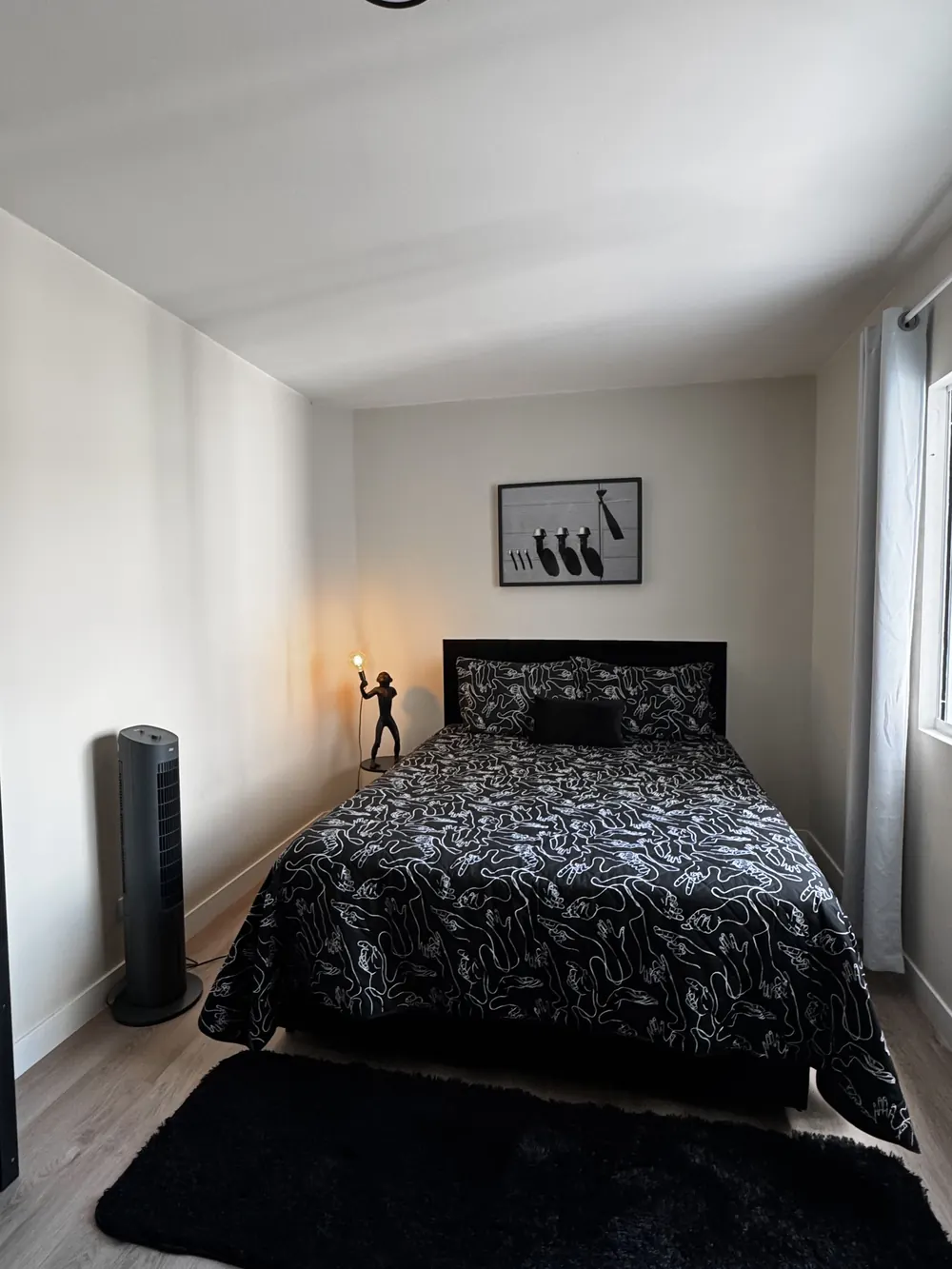
Use mirrors with purpose
A mirror doubles whatever it faces, so place it where it reflects a window or a lamp, not a cluttered wardrobe. A tall leaning floor mirror works well beside a wardrobe, and a round mirror above a slim dresser adds a soft curve to a room full of right angles. Mirrored wardrobe doors are the most space-efficient option of all, since they replace a separate mirror altogether.
Edit the bedding and textiles
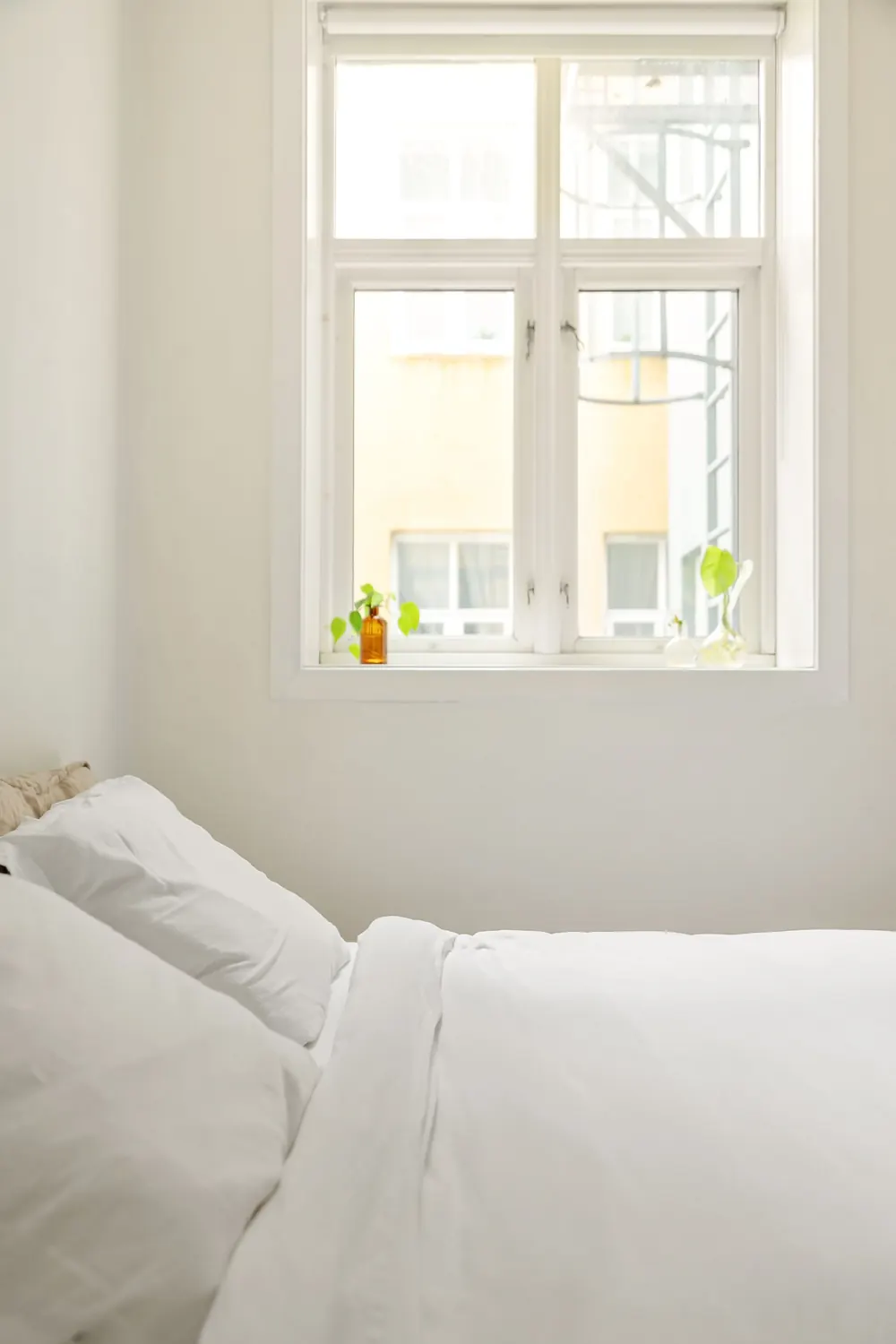
In a small bedroom, the bed is the main decorative surface. Keep the bedding simple and tactile: a washed linen duvet cover, a knit or waffle throw folded across the bottom third, two sleeping pillows and no more than two decorative cushions. Too many pillows take over the room and end up on the floor.
A rug should be large enough that the bottom two-thirds of the bed sits on it, with 18 inches showing on each side. A small rug floating in the middle of the floor cuts the room into pieces. For a full bed, a 5x8 rug laid horizontally usually works; for a queen, aim for 8x10 if the room allows.
Keep the walls calm and personal
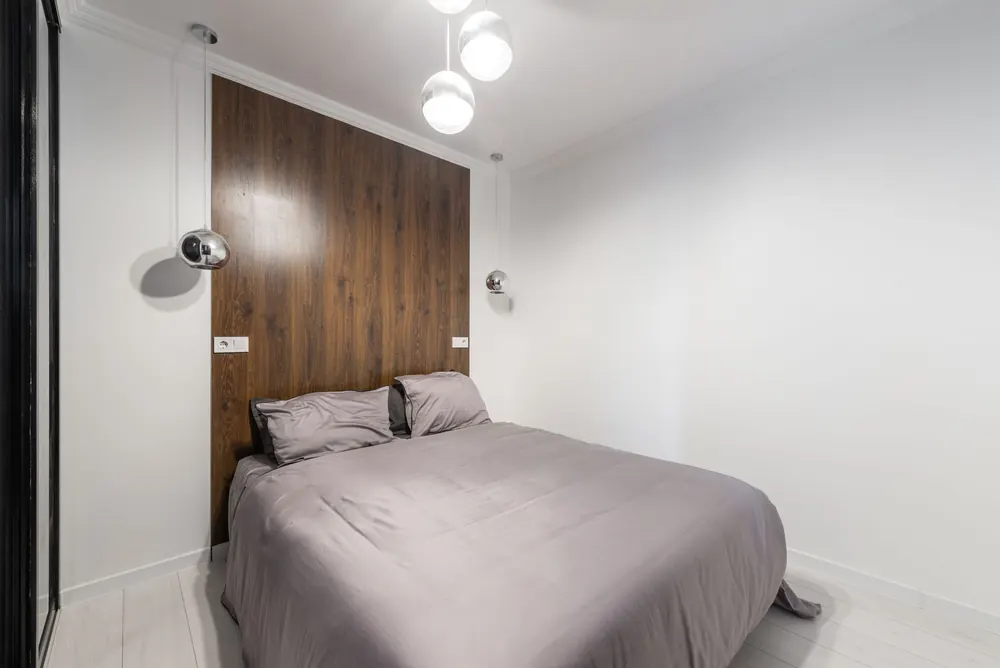
One large piece of art above the bed looks more generous than a gallery wall of small frames, which can feel busy in a confined space. Hang it so the bottom edge sits 8 to 10 inches above the headboard. A pair of matching prints or a single textile hanging also works. Choose pieces with soft, open compositions: landscapes, line drawings or abstract washes.
Add one or two living things. A trailing pothos on a high shelf or a snake plant in a corner brings colour and softness without taking floor space, and both tolerate low light.
Shared rooms and kids' small bedrooms
For siblings or guest rooms that double as an office, think in zones. Bunk or loft beds free a whole wall for a desk or play area. A wall-mounted fold-down desk or a narrow console under the window creates a workspace that disappears when you need the floor. Keep each person's storage clearly separated, with labelled baskets or colour-coded bins, so the room stays tidy without constant nagging.
Common small bedroom mistakes
- Matching furniture sets. A bed, dresser and nightstands from one collection add bulk and look flat. Mix wood tones and lighter pieces.
- Dark heavy curtains on a short rod. They shrink the window and the whole wall.
- One overhead light. It casts shadows and makes the room look smaller at night.
- Keeping everything. A small bedroom only works with an edit. Once a season, take out what you have not used and store it elsewhere.
For more ways to soften a room, see our guide to cozy living room ideas, and if you have a spare corner, a reading nook can turn even a narrow bedroom into a retreat.
Get the Home Journal Co letter
One thoughtful email a week with our newest guides and seasonal ideas. No spam, unsubscribe anytime.
Save this guide for later — this image is sized for pinning.
Some posts may contain affiliate links; see our disclosure. Photography: Nelia Lupa; noen nunik; Vadim Malitskii; blogrosse; Ritam Das; Andrea Davis; La Miko; Prasad Anvekar; Dwi Setyo; Fernanda Neitzel; Lisa Anna; Max Vakhtbovych via Pexels.