Dining Room Decor Ideas: Designer Rules for a Room That Works Every Day
Dining room decor ideas that work for everyday meals and dinner parties: the right table clearances, chandelier height, colourful chairs, art, centrepieces, window treatments, rugs, mixed materials and layered lighting, with measurements designers use.
A dining room is judged in two very different moments: on an ordinary Tuesday, when it is mostly seen in passing, and on the night you have eight people round the table. Good dining room decor works in both. It looks finished when the table is bare, and it gets out of the way when the table is full of food. These ideas start with the measurements that make a room comfortable, then move on to colour, art, light and texture.
Get the table size and clearances right
Before any decor, check the room's proportions. Designers allow at least 36 inches between the edge of the table and the nearest wall or piece of furniture, and 42 to 48 inches where people need to walk behind seated guests. Each diner needs about 24 inches of table width to eat comfortably.
That means a 72 inch rectangular table seats six, and a room of about 12 by 14 feet is right for it. If your room is tighter, a round or oval table will feel better than a rectangle because there are no corners to squeeze past. Measure first, because no amount of styling fixes a room where chairs bang into the sideboard.
Hang the chandelier at the right height
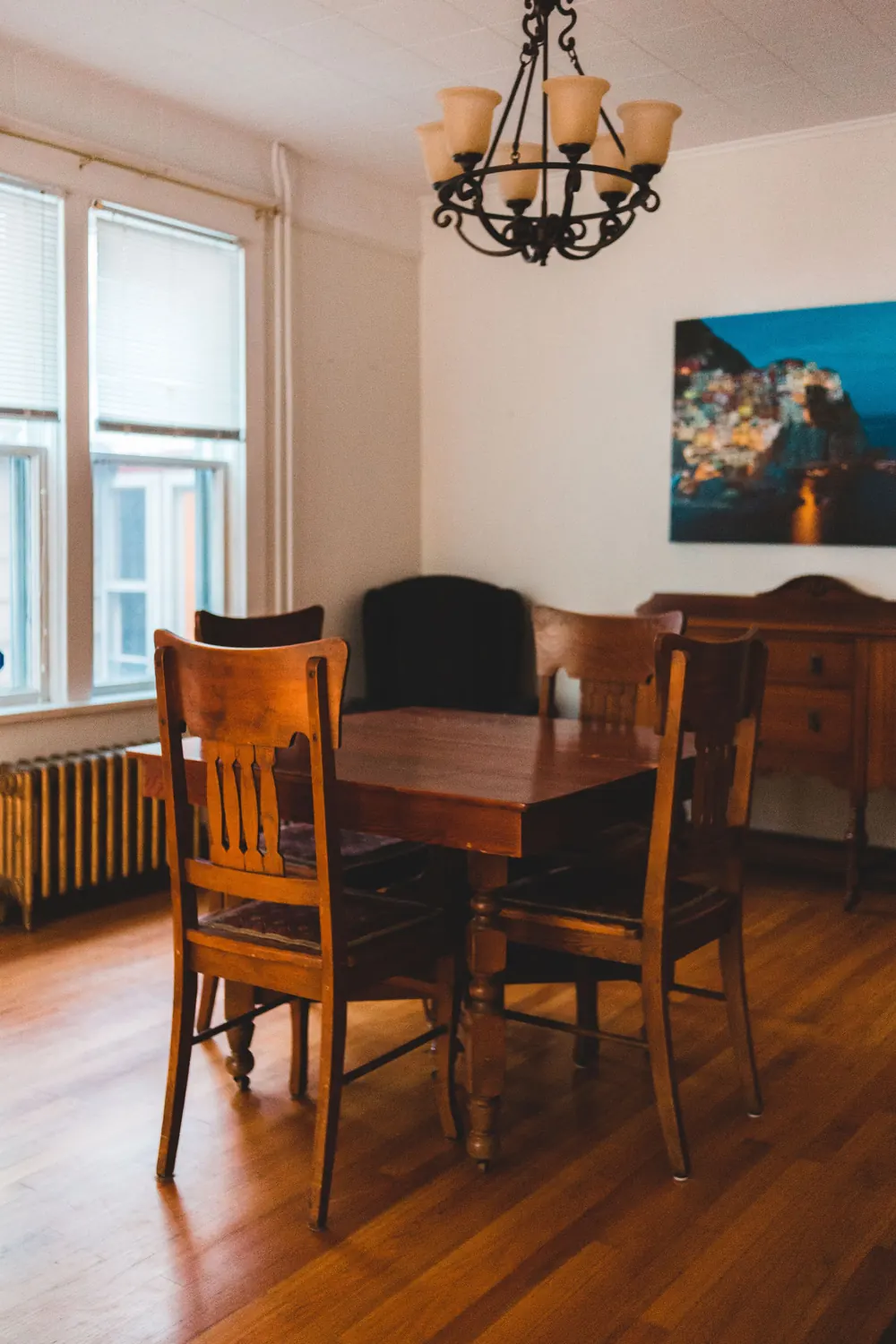
The light fixture is the jewellery of a dining room, and its height matters more than its price. The usual rule, repeated in the Kichler lighting guide and most designer guides, is that the bottom of the fixture should sit 30 to 36 inches above the tabletop with an 8 foot ceiling, rising about 3 inches for each extra foot of ceiling height.
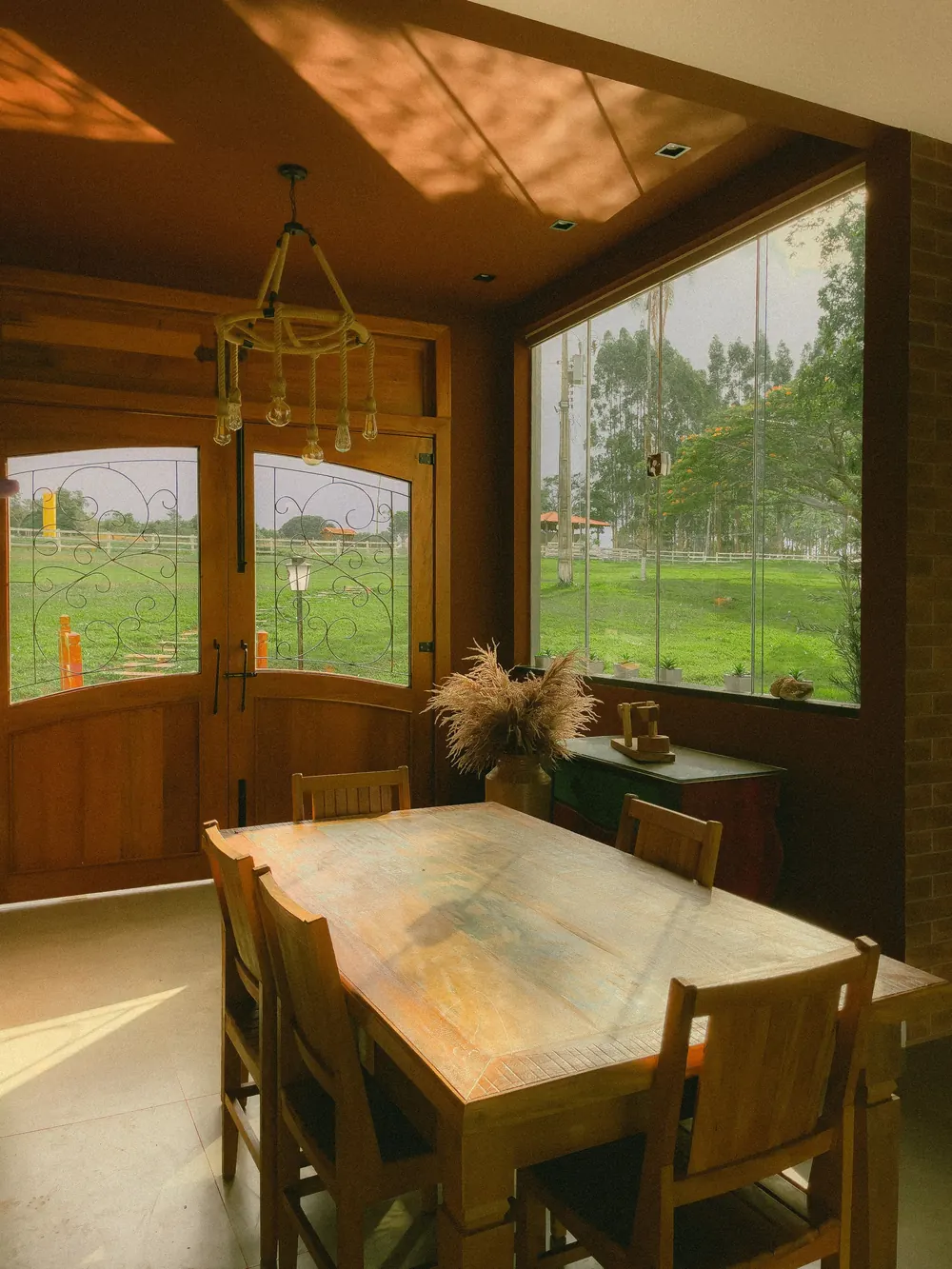
Size the fixture to the table, not the room. A diameter of half to two-thirds of the table's width looks balanced, or about 12 inches narrower than the table. Over a long rectangular table, a linear fixture or two matching pendants spaced evenly along its length works better than one round chandelier. A traditional brass or wrought-iron chandelier like the one above suits wooden furniture and warm walls.
Bring in colour with the chairs
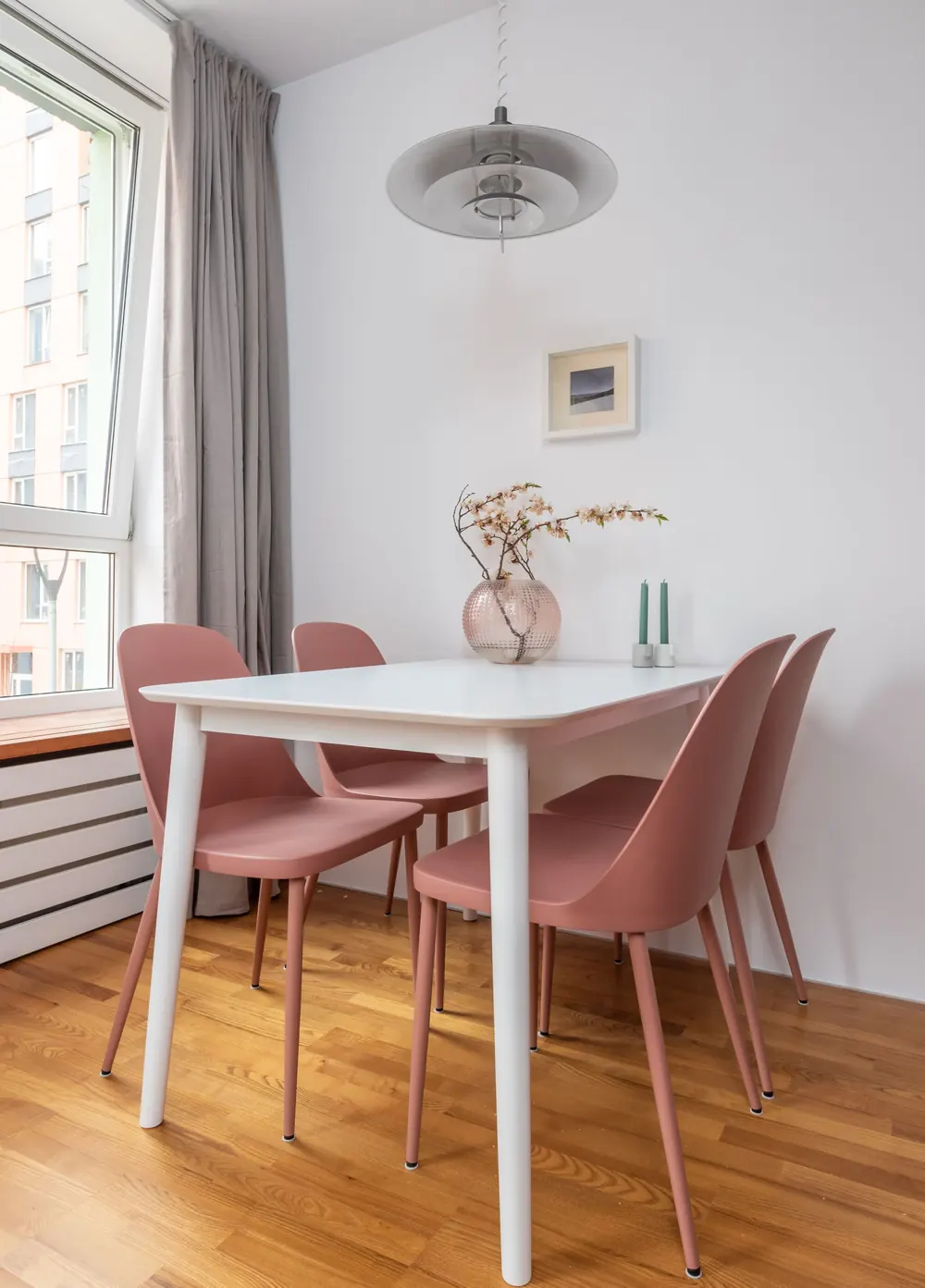
Chairs are the easiest way to add colour without painting. Upholstered chairs in blush, sage, rust or navy around a plain wooden or white table make the whole room feel designed, and they are simple to swap later.
Keep the walls and table quiet when the chairs are bold. A light oak table, white walls and four pink velvet chairs, as in the photo above, look fresh precisely because nothing else competes. If you are nervous about colour, choose performance velvet or a wipeable boucle so spills are not a worry.
Use one large piece of art
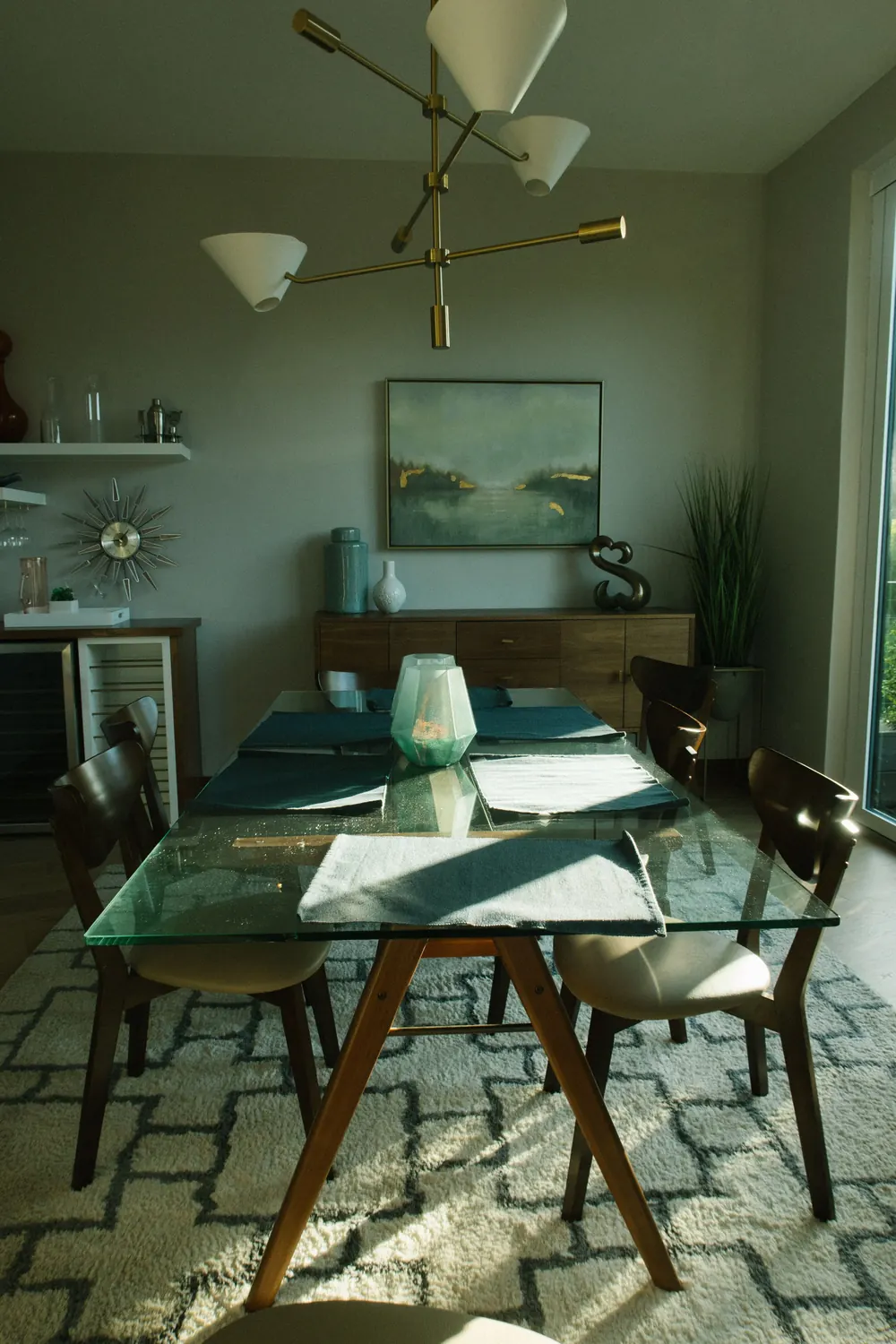
Small frames scattered across a dining room wall tend to look busy behind a table. One large piece, or a pair hung side by side, gives a calmer focal point. Choose art that is about two-thirds the width of the sideboard or table beneath it, and hang it so the bottom of the frame sits 8 to 10 inches above the furniture.
Abstract paintings, large botanical prints and photography all work. Pick a colour from the art and repeat it twice elsewhere, in a vase, a table runner or the chair cushions, so the room looks pulled together.
Dress the table between meals
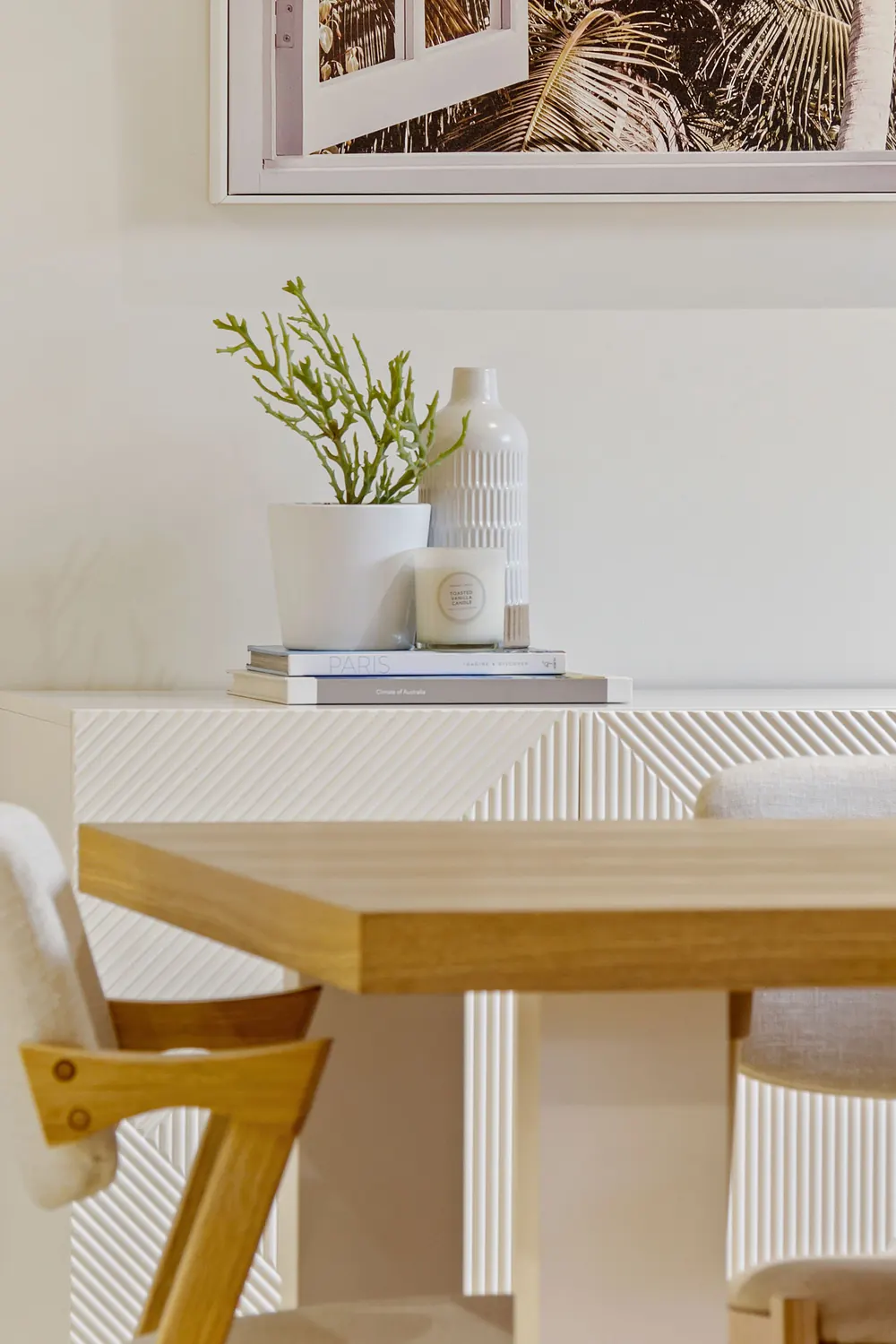
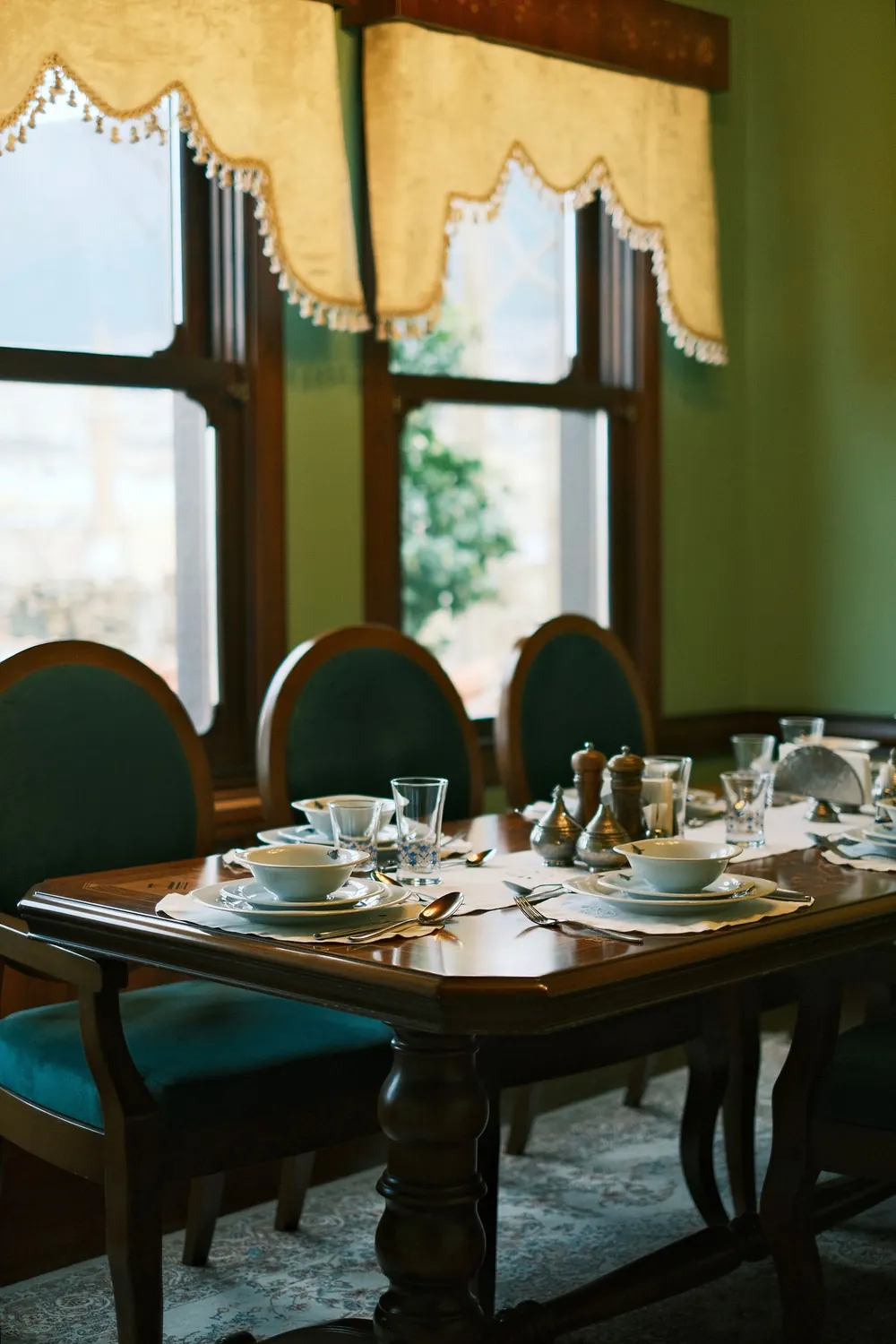
A bare table looks unfinished, but a table covered in decor has to be cleared before every meal. The answer is a centrepiece that can be lifted off in one go: a long tray or runner holding a low bowl, two candlesticks and a small vase.
Keep the centrepiece under 12 inches tall so people can see each other across the table. Change it with the seasons: a bowl of lemons in spring, a cluster of gourds and taper candles in autumn, and greenery with brass candlesticks in December. For dinner parties, our guides to Thanksgiving table decor and a Christmas table setting take the table further.
Make the most of the windows
Natural light makes food and faces look better, so dining room windows should be dressed lightly. Linen or cotton curtains hung high and wide, with the rod 4 to 6 inches above the frame and extending 8 to 10 inches past each side, make windows look bigger and let in more light when open.
Roman blinds suit smaller dining rooms because they do not take up floor space. If the room faces a garden, consider leaving the windows bare and using the view as the art.
Mix materials: marble, wood and brass
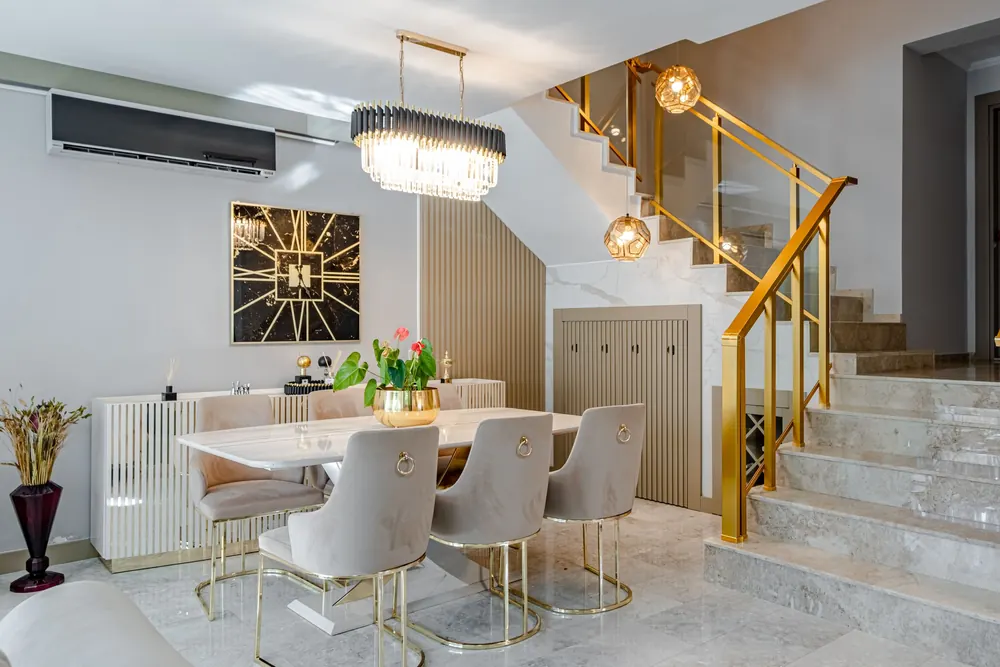
Rooms that feel expensive usually combine three or four materials. A marble or stone table with wooden chairs, a brass light and a linen runner gives a mix of cool, warm, shiny and soft surfaces.
Keep metal finishes to two at most, for example brass with black, or chrome with natural wood. Repeat each material at least twice, so a brass chandelier is echoed by brass candlesticks or picture lights. Marble needs coasters and placemats for red wine and citrus, so treat it as part of the decor and choose attractive ones.
Go moody with dark walls
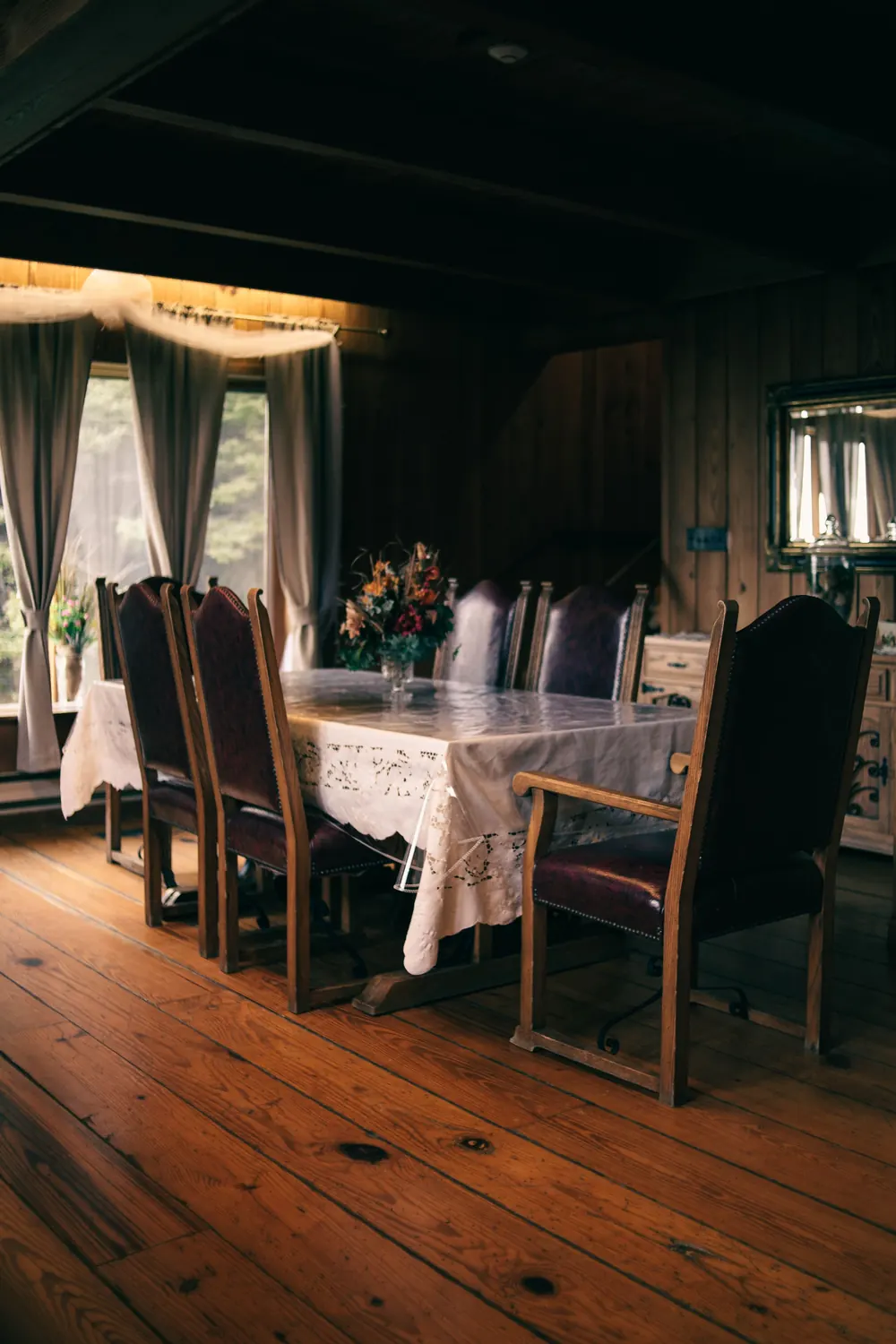
Dining rooms are mostly used in the evening, which makes them the perfect place for a dark paint colour. Deep green, inky blue, aubergine and charcoal look rich by candlelight and make the room feel intimate rather than small.
Paint the walls and trim the same colour, in a matte or eggshell finish, for a seamless, enveloping look. Balance the darkness with warm wood, white tableware and plenty of soft light. A dark room with rustic wooden furniture, like the one above, feels like a country inn.
Mix vintage and new chairs
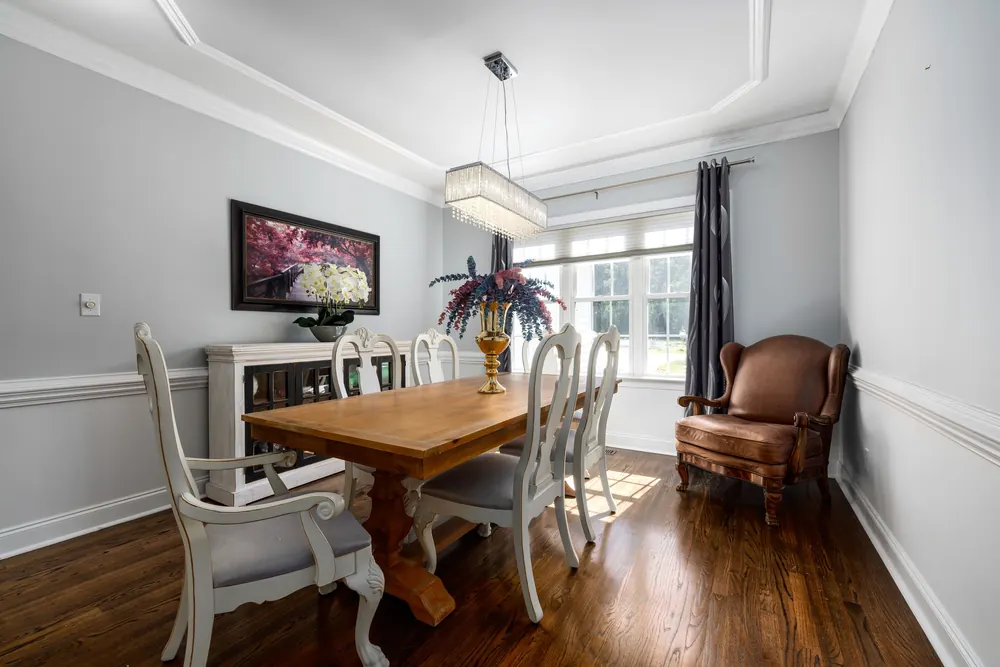
Matching dining sets can look like a showroom. A more relaxed approach is to keep the table and change the chairs: vintage bentwood or Windsor chairs around a modern table, or one style of chair in two colours.
To make mismatched chairs look intentional, connect them with one shared element: the same colour, the same material or the same height. Two upholstered host chairs at the ends of the table with simpler side chairs is the easiest version and looks good in any style.
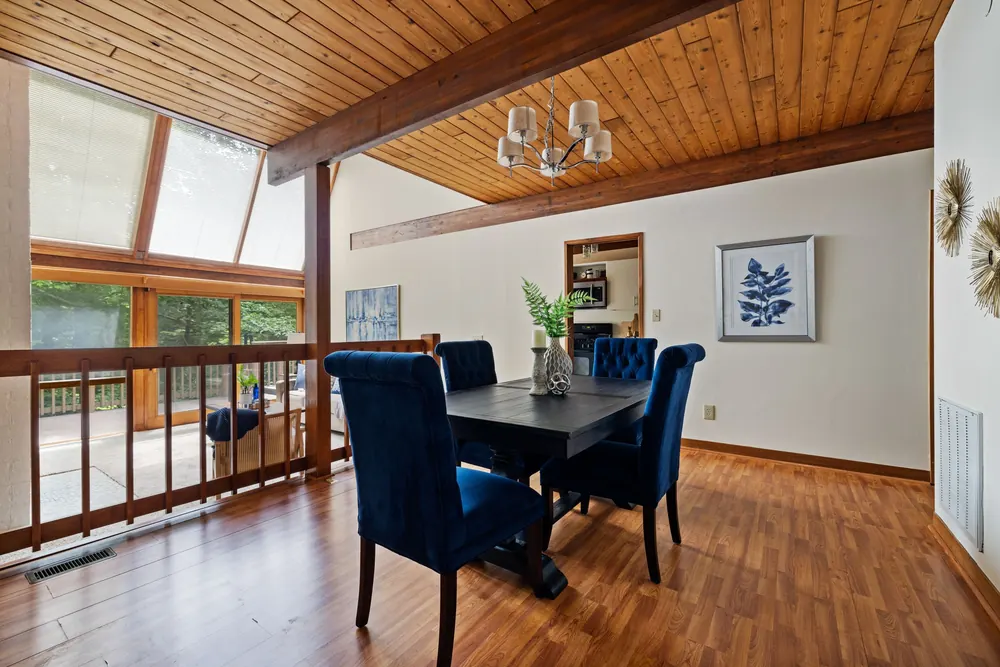
Add colour overhead or underfoot
Ceilings are the forgotten fifth wall. A wood-clad ceiling, a painted ceiling a shade darker than the walls, or a wallpapered ceiling makes a dining room feel special. Underfoot, a rug defines the dining zone, especially in open-plan spaces.
Choose a rug that extends at least 24 to 30 inches beyond each side of the table, so chairs stay on the rug when they are pulled out. Low-pile wool and flatweaves are the most practical because chairs slide easily and crumbs come out with a vacuum. In a room with blue chairs, as above, a neutral rug and warm wooden ceiling keep the colour from feeling cold.
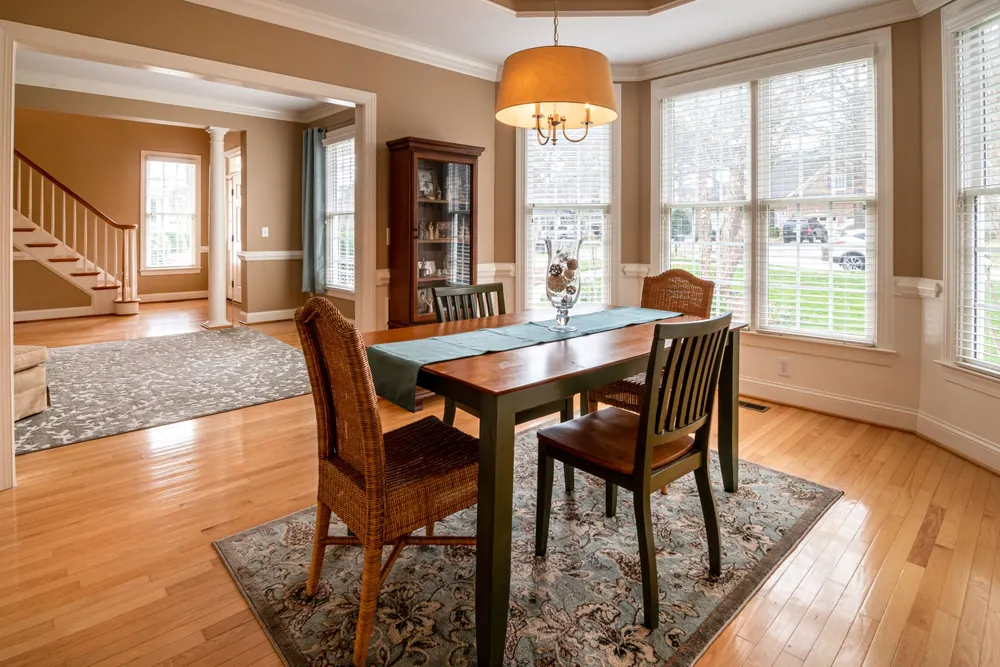
Use natural textures: rattan and wicker
Rattan, cane and wicker chairs make a dining room feel light and relaxed, and they pair well with sunny rooms and wooden tables. Their open weave lets light through, so they are also a good choice for smaller spaces.
Add seat cushions in linen for comfort, and repeat the texture with a woven pendant shade, seagrass placemats or a cane-fronted sideboard. Use natural textures in moderation, two or three pieces, so the room stays elegant rather than beachy.
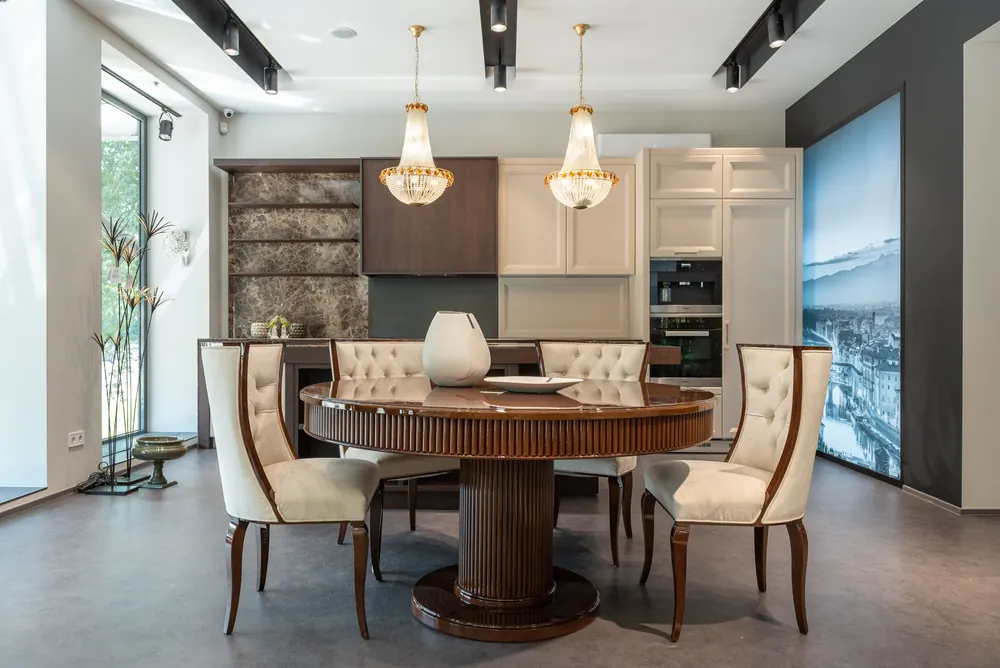
Choose a round table for small rooms
Round tables are friendlier for conversation and easier to fit into small rooms and breakfast nooks. A 48 inch round seats four comfortably and six at a squeeze, while a 60 inch round seats six to eight.
A pedestal base is best because there are no legs to bump knees on. Centre a round chandelier or pendant over it, and match the shape with a round rug and a round mirror to soften a square room. In open-plan spaces, a round table also creates a natural walking path around it. If your dining area shares space with the kitchen, borrow ideas from our kitchen decor ideas to tie the two together.
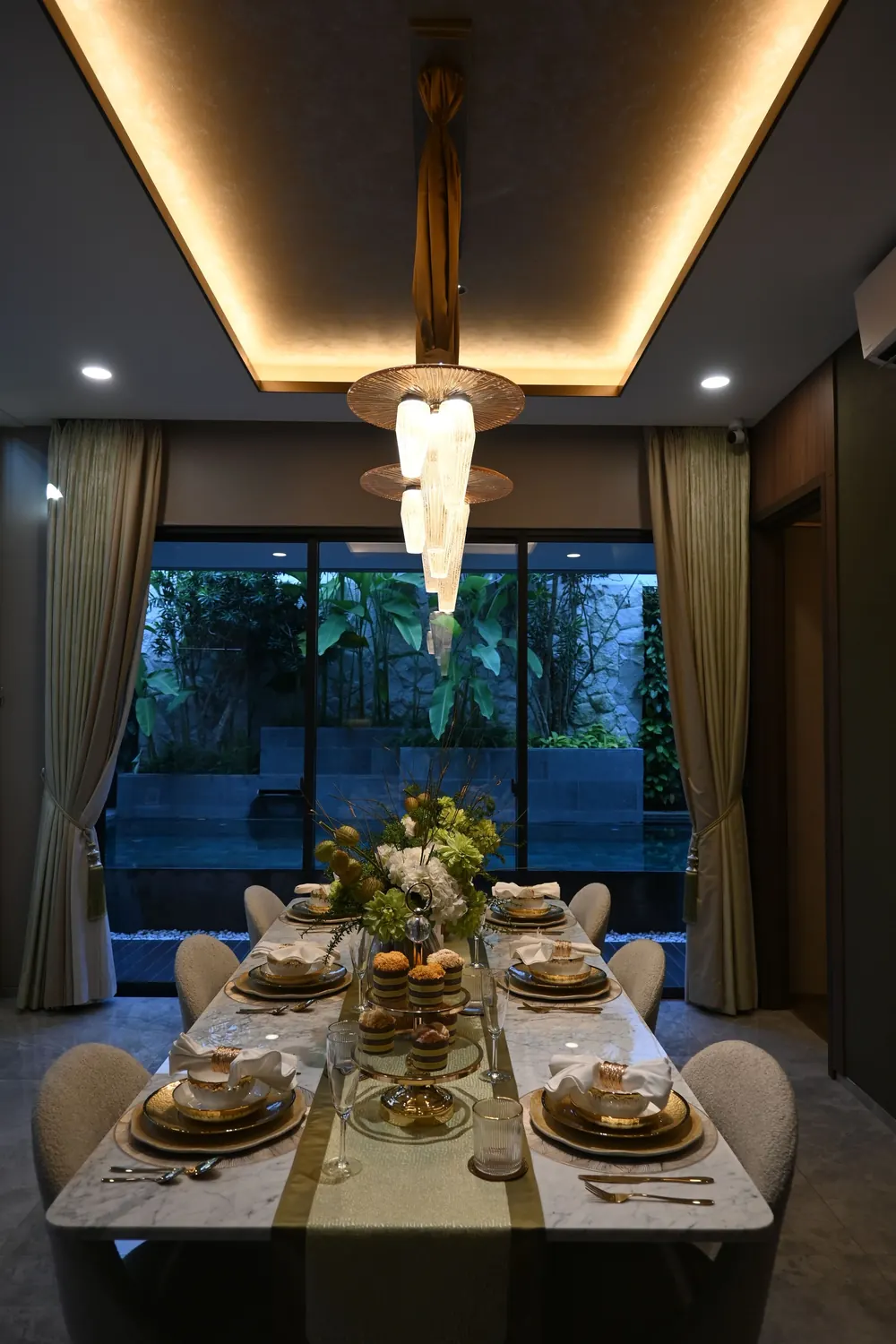
Layer the lighting for evening
One overhead light makes a dining room feel flat. Layer three types: the chandelier over the table, softer light around the walls from sconces or lamps on the sideboard, and candlelight on the table itself.
Put the chandelier on a dimmer; it is the single most useful upgrade in a dining room. Use warm bulbs of 2700K, never cool white, and aim for about 10 to 20 foot-candles of light, which works out at roughly 1800 to 3600 lumens for a 12 by 15 foot room. For the living space next door, the same principles appear in our cozy living room ideas.
Get the Home Journal Co letter
One thoughtful email a week with our newest guides and seasonal ideas. No spam, unsubscribe anytime.
FAQ
How do I decorate a dining room on a budget?
Start with paint, a dimmer switch and a centrepiece made from things you own. Then swap chair cushions or slipcovers, and add one large print in a cheap oversized frame. These changes cost far less than new furniture and transform the room.
What size rug should go under a dining table?
The rug should extend at least 24 to 30 inches beyond every side of the table so the back legs of the chairs stay on the rug when guests sit down.
How high should a chandelier be above a dining table?
With an 8 foot ceiling, hang the bottom of the chandelier 30 to 36 inches above the tabletop. Add about 3 inches for every additional foot of ceiling height. The Spruce has a clear walkthrough of hanging a dining room chandelier if you are fitting one yourself, though a heavy fixture is a job for an electrician.
What should I put on my dining table when not in use?
A low centrepiece on a tray or runner: a bowl of fruit or greenery, two candlesticks and a small vase. Keep it under 12 inches tall and easy to lift off before meals.
Save this guide for later — this image is sized for pinning.
Some posts may contain affiliate links; see our disclosure. Photography: Martin Lang; Erik Mclean; Max Vakhtbovych; Athena Sandrini; Emre Gencer; Caio Mantovani; Furkan Tumer; Erik Mclean; Curtis Adams; Curtis Adams; Curtis Adams; Max Vakhtbovych; May umaran via Pexels.