Home Office Decor Ideas: A Room That Works and Looks Good on Camera
Home office decor ideas that help you focus and still look finished on a video call: desk layout, lighting, storage, wall colour, seating, plants and a few designer rules for small rooms, spare bedrooms and corners that have to work hard every day.
A home office has to do two jobs at once. It needs to support real work, clear surfaces, good light and a chair you can sit in for hours, and it needs to look calm when the camera turns on. Good home office decor ideas start with how you use the room, then add the colour, storage and soft details that make it feel like a place you want to enter each morning. The ideas below cover layout, lighting, walls, storage and styling for rooms of every size.
Put the desk where your body and the camera agree
Start with the desk, not the decor. Place it so your dominant light comes from the side or slightly in front of you, not from behind, which turns you into a silhouette on video calls. Facing a wall can help focus; facing into the room feels more open but invites distraction.
Leave 36 inches of clear space behind the chair if you can, so you can push back without hitting a wall or radiator. If the room is a spare bedroom, float the desk on the wall opposite the bed rather than under a window that glares on the screen at midday. Cable management is part of decor: a simple raceway or a basket under the desk hides the mess that ruins an otherwise tidy room.
Get the task light right
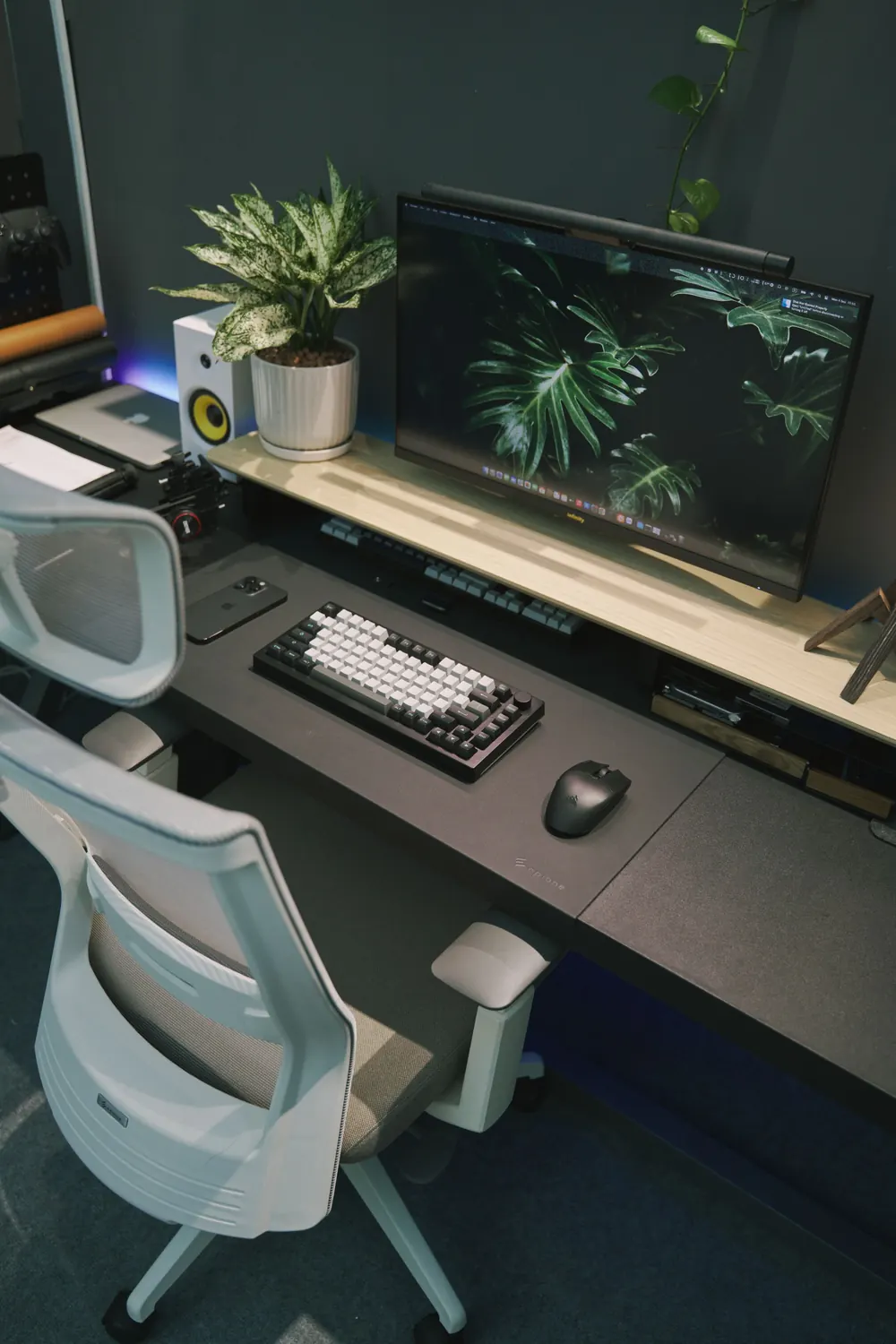
Overhead lights alone make a home office feel flat and cause eye strain. Add a dedicated task light on the desk, preferably with a warm-to-neutral bulb around 3000K and an adjustable arm so you can light paper without washing out your screen.
For video calls, a soft light in front of you, a ring light, a lamp bounced off the wall or a window with a sheer curtain, is more flattering than a bright ceiling fixture. Avoid mixing cool daylight LEDs with warm lamps in the same frame; pick one colour temperature and stick to it. If you work early or late, a floor lamp behind the desk adds depth on camera without shining into your eyes.
Choose a chair you can live with for eight hours
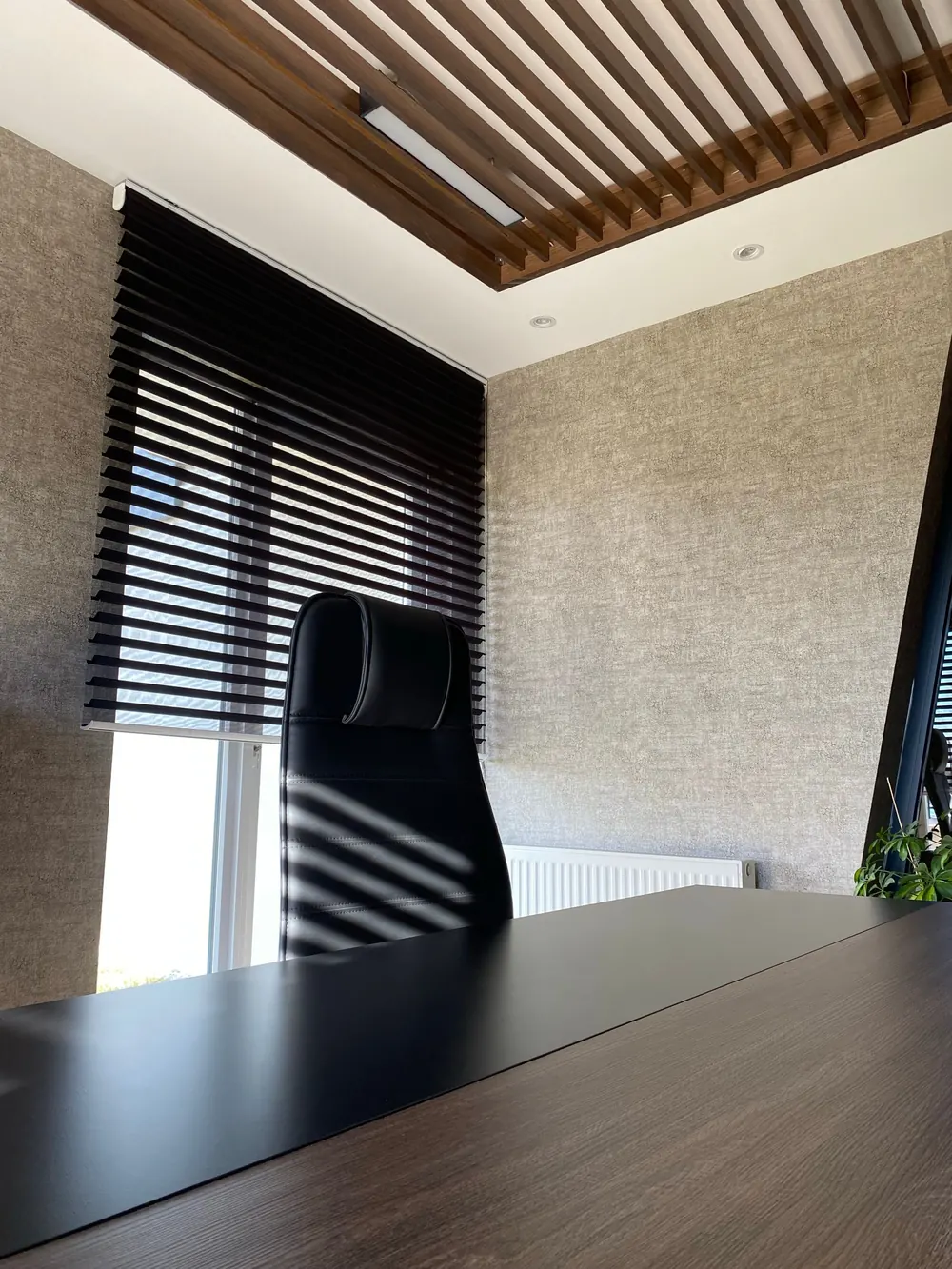
No amount of styling fixes a bad chair. Look for adjustable seat height, lumbar support and armrests that let your shoulders relax. If a full ergonomic chair looks too technical for the room, choose an upholstered desk chair with a firm seat and add a small lumbar cushion.
Put the chair on a mat if you have carpet that fights the wheels, or a hard floor that will scratch. On camera, a chair in a solid colour, navy, charcoal, camel or soft green, looks more intentional than a busy pattern. Keep a throw on the back only if you actually use it; decorative draping reads as clutter in a small office.

Use the wall behind you as a backdrop
The wall behind your desk is the one everyone else sees. Treat it like a set. A single piece of art, a floating shelf with a few books and one plant, or a pinned fabric board all work. Avoid a messy bookcase stuffed edge to edge unless you style the shelves in intentional groups with empty space.
Hang art so the centre sits near eye level when you are seated, roughly 48 to 52 inches from the floor, so it frames your head on camera rather than floating above it. A soft paint colour, warm white, greige, muted green or dusty blue, photographs better than pure white under indoor light. If you love wallpaper, use it on the wall behind you and keep the other walls quiet.
Build storage that closes
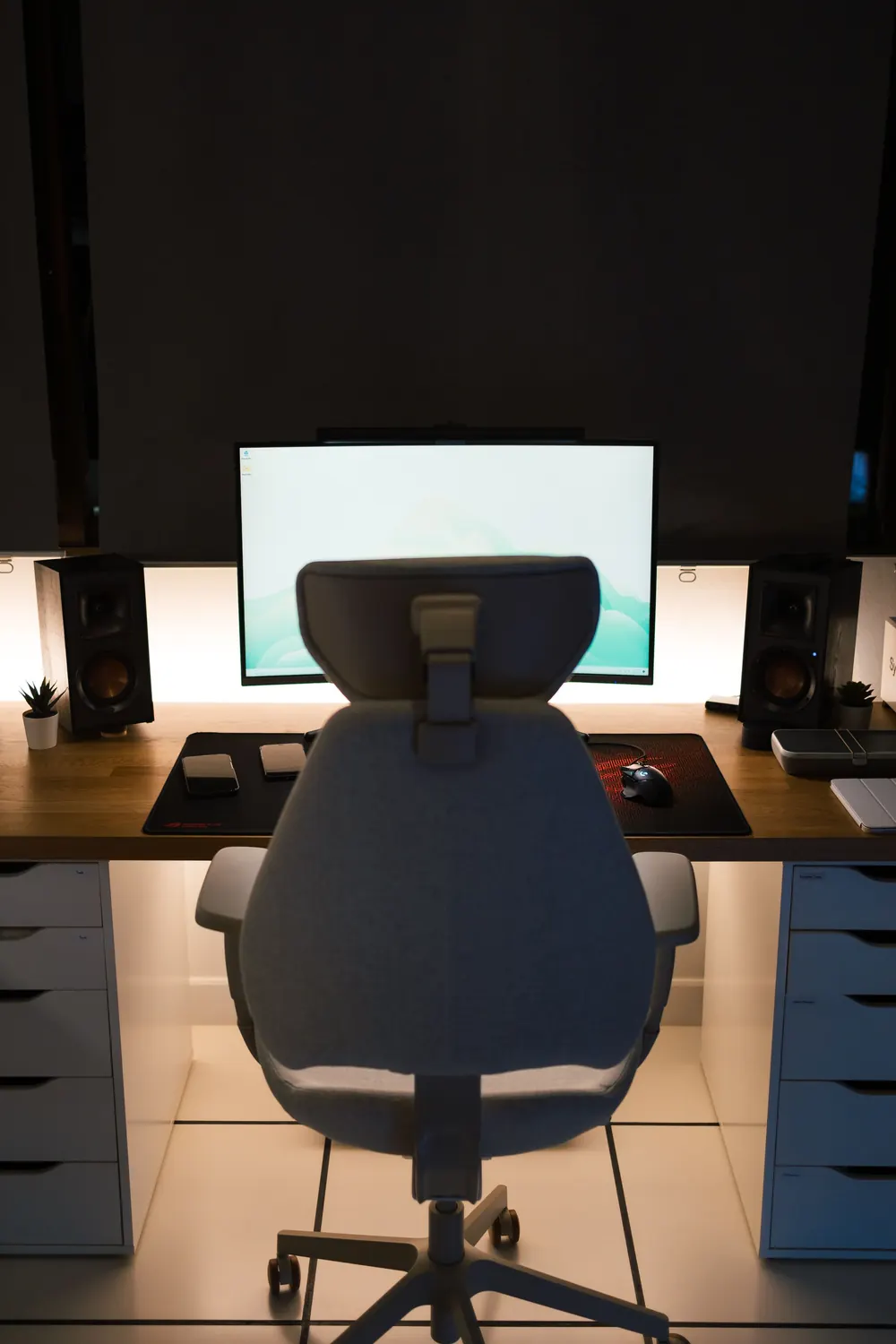
Open storage looks styled in photos and chaotic by Thursday. Aim for at least half of your storage to close: a cupboard, drawers or boxes with lids. Use magazine files, identical boxes and a single tray for daily papers so surfaces can be cleared in one minute before a call.
Vertical storage is your friend in a small home office. Tall bookcases, wall-mounted shelves above the desk and a narrow trolley that slides beside the desk keep the floor open. Label discreetly. A room that looks designed usually has fewer visible categories, not more.
Style the desk with three zones
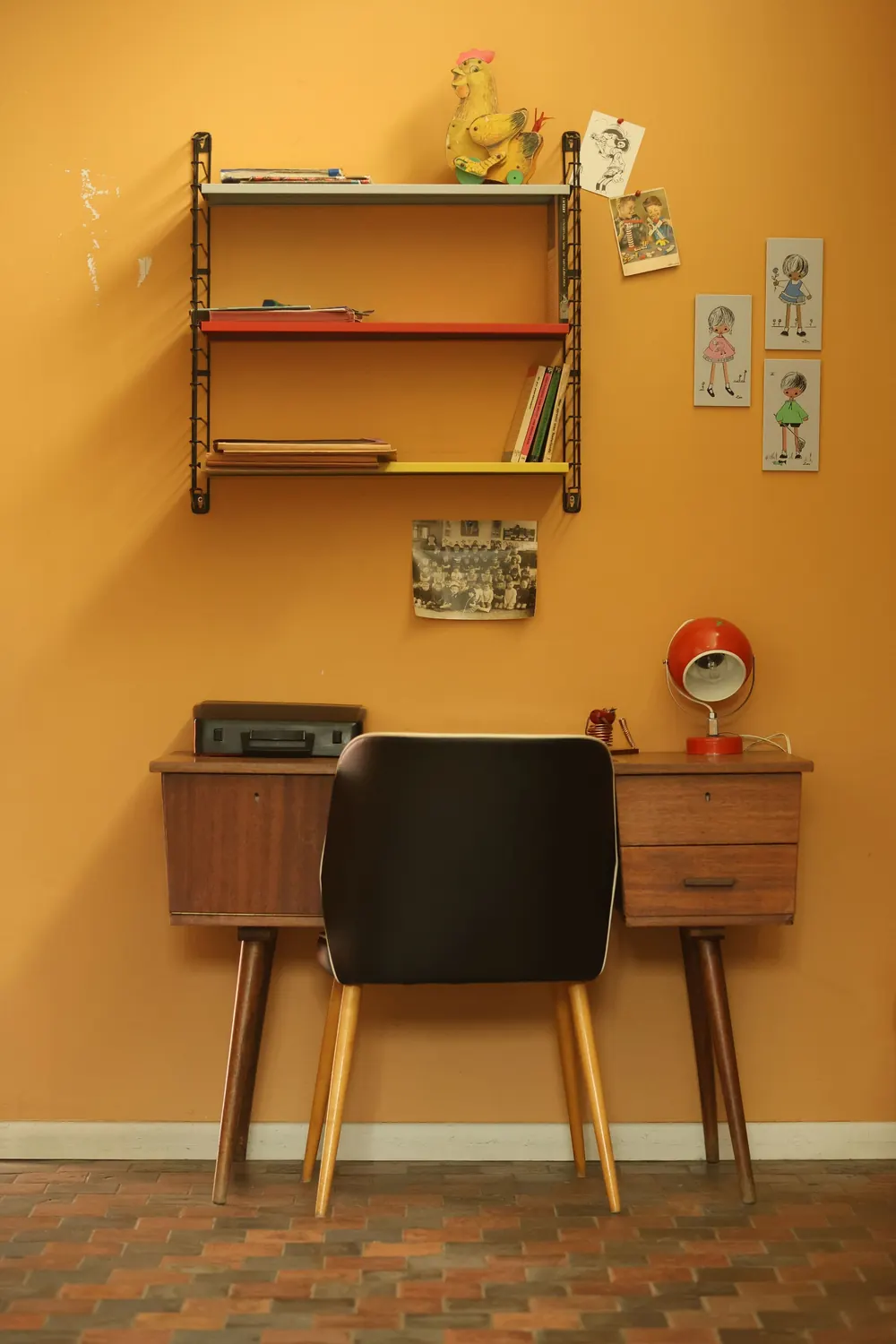
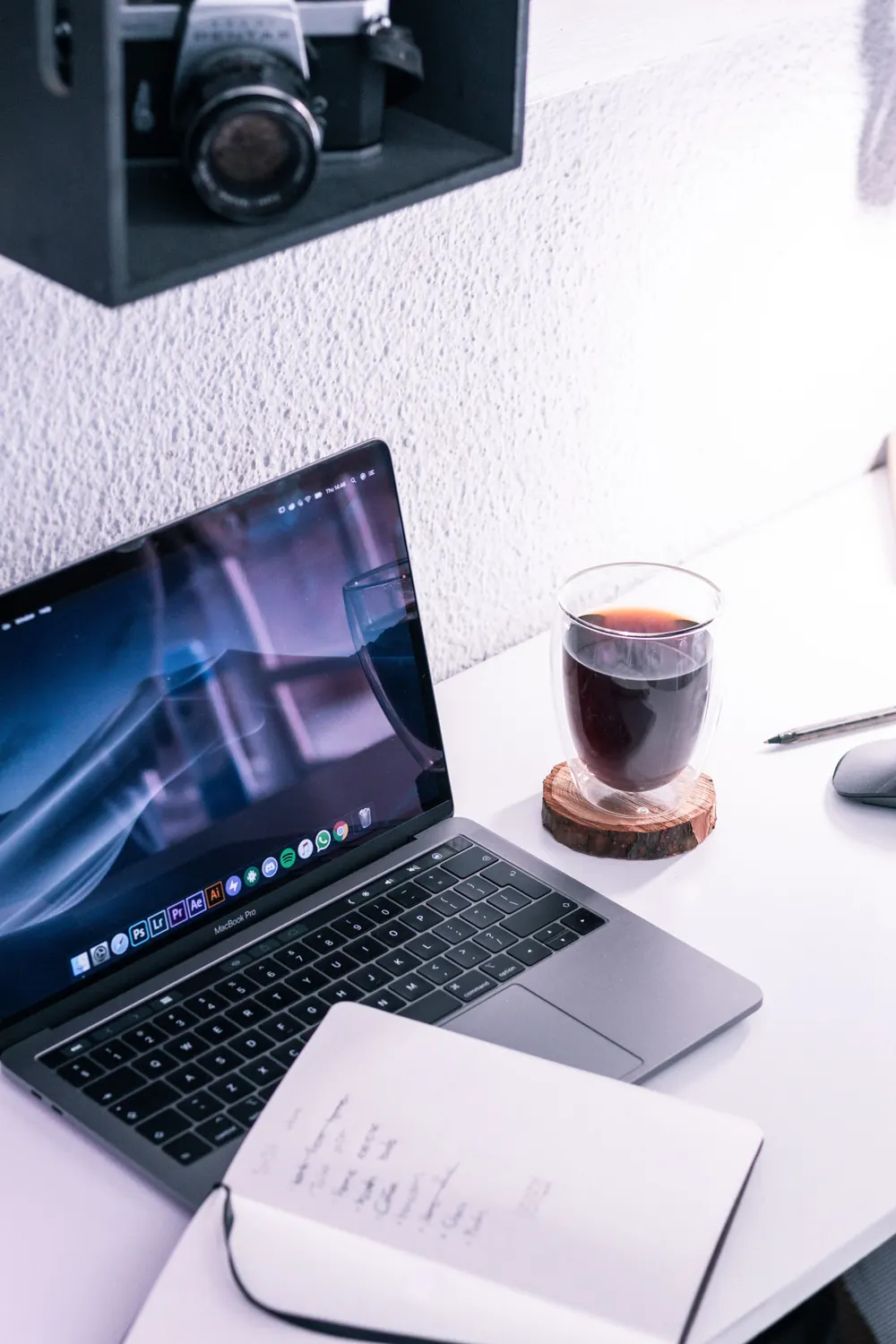
A calm desk has three zones: a work zone in the centre for the laptop or monitor, a tool zone to one side for the lamp, notepad and pens, and a soft zone with one personal object, a plant, framed photo or small sculpture. Everything else lives in a drawer.
Monitors look better raised so the top of the screen sits near eye level. A simple stand or a stack of books works. Hide the docking station and cables behind the stand. One tray corrals the remote, USB drives and lip balm that otherwise scatter across the surface. When the desk is clear, the whole room feels finished.
Soften the room with textiles and plants
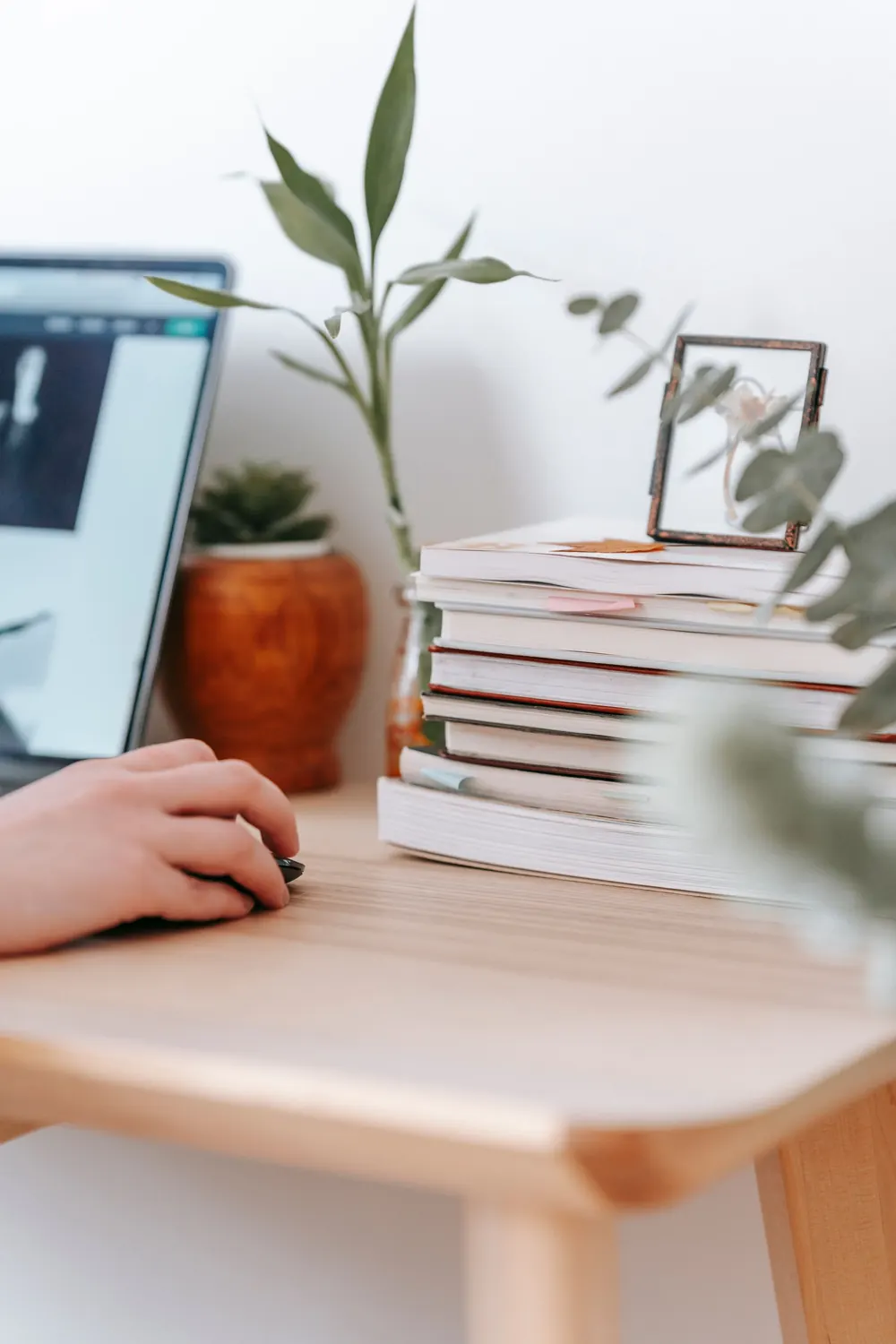
Hard floors, glass and screens make a home office noisy and cold. A rug under the desk and chair (large enough that the chair stays on it when rolled back) absorbs sound and defines the zone in a shared room. Linen or cotton curtains soften window glare without darkening the space the way heavy drapes do.
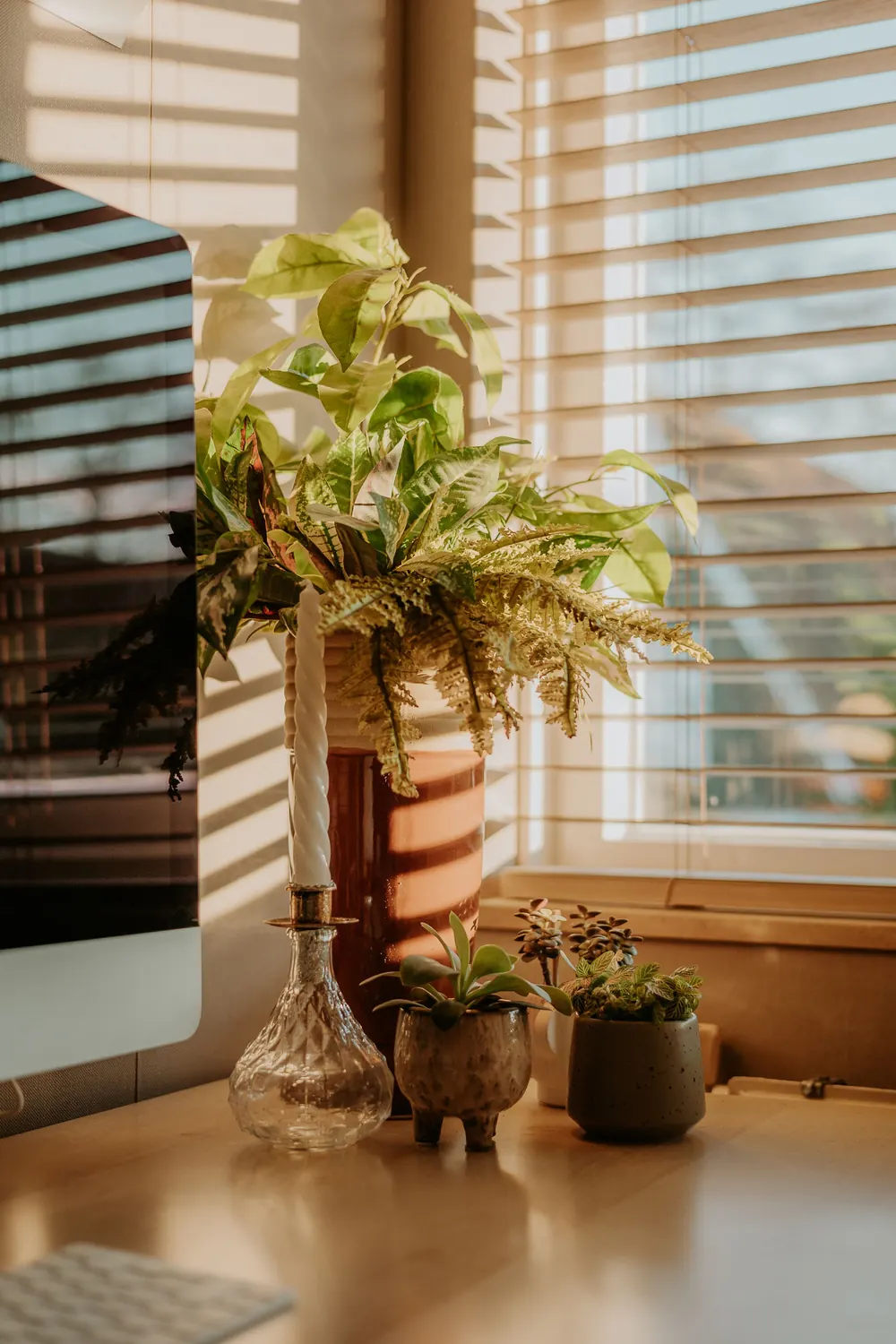
One or two plants are enough. A snake plant, ZZ plant or pothos tolerates typical office light and neglect. Place them where they get some natural light and will not shed onto the keyboard. On camera, a plant over one shoulder adds life without distracting from your face.
Make a small or shared office work harder
Not every home has a spare room. A closet office, a landing desk or a corner of the living room can still feel intentional. Use a shallow desk (20 to 24 inches deep), wall-mounted shelves and a lamp that can be moved aside when the space returns to family life.
A folding screen or tall bookcase can separate a work corner from a sofa. In a guest room office, choose a daybed or a bed with storage drawers and a desk that can clear to a vanity surface when guests arrive. Our small bedroom decor ideas share measurements that help when the room has to sleep someone overnight.
Layer materials so it does not feel like a cubicle
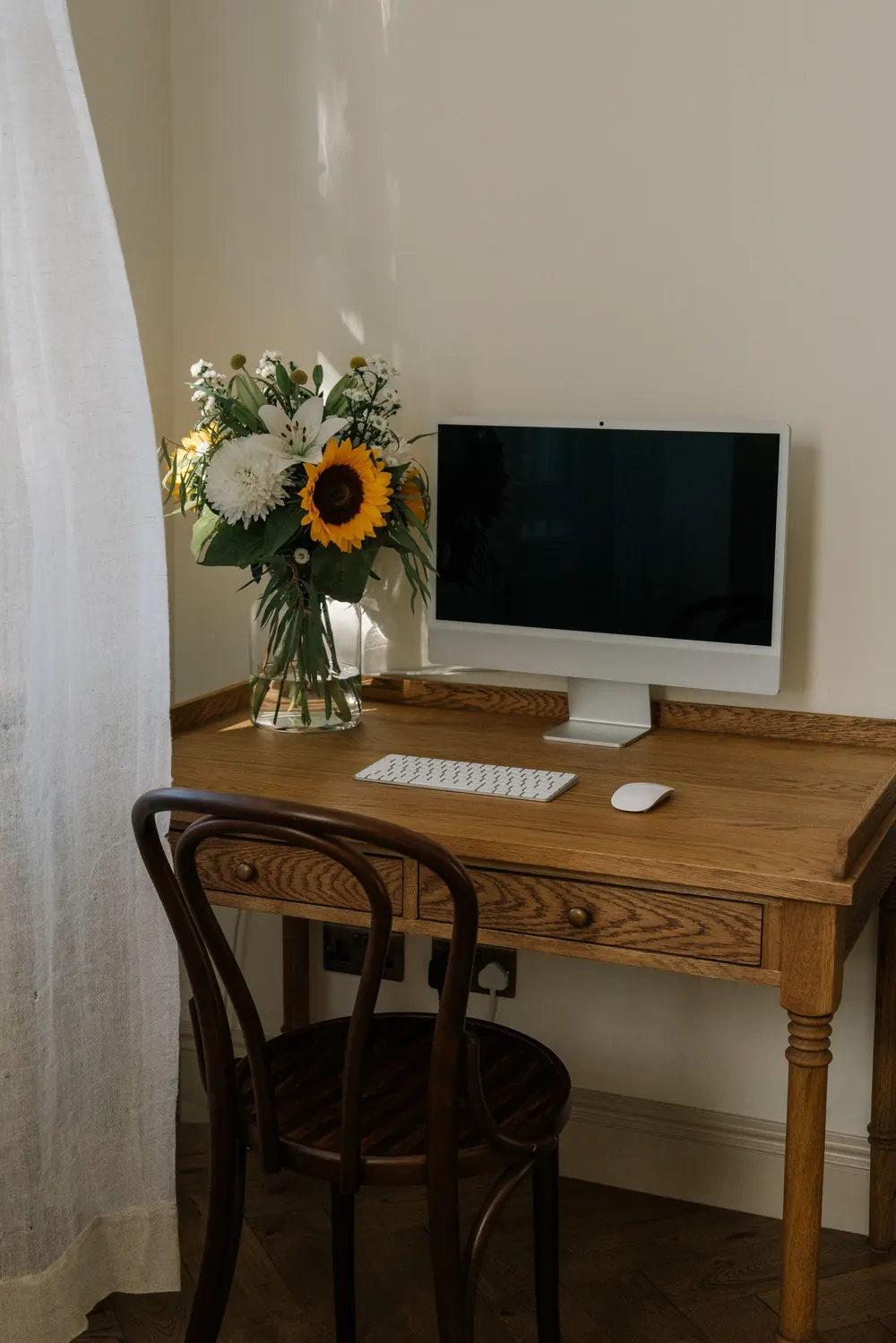
Home offices that feel warm usually mix three materials: wood, metal and fabric, for example. A wood desk with a metal lamp and an upholstered chair beats an all-white plastic setup. Repeat each material at least twice so the mix looks deliberate.
Keep tech in one finish if you can, all silver or all black, so the desk does not look like a showroom of gadgets. A ceramic cup for pens, a fabric pinboard and a wooden tray add the human texture that makes the room pleasant for long days.
Keep a closing-down ritual
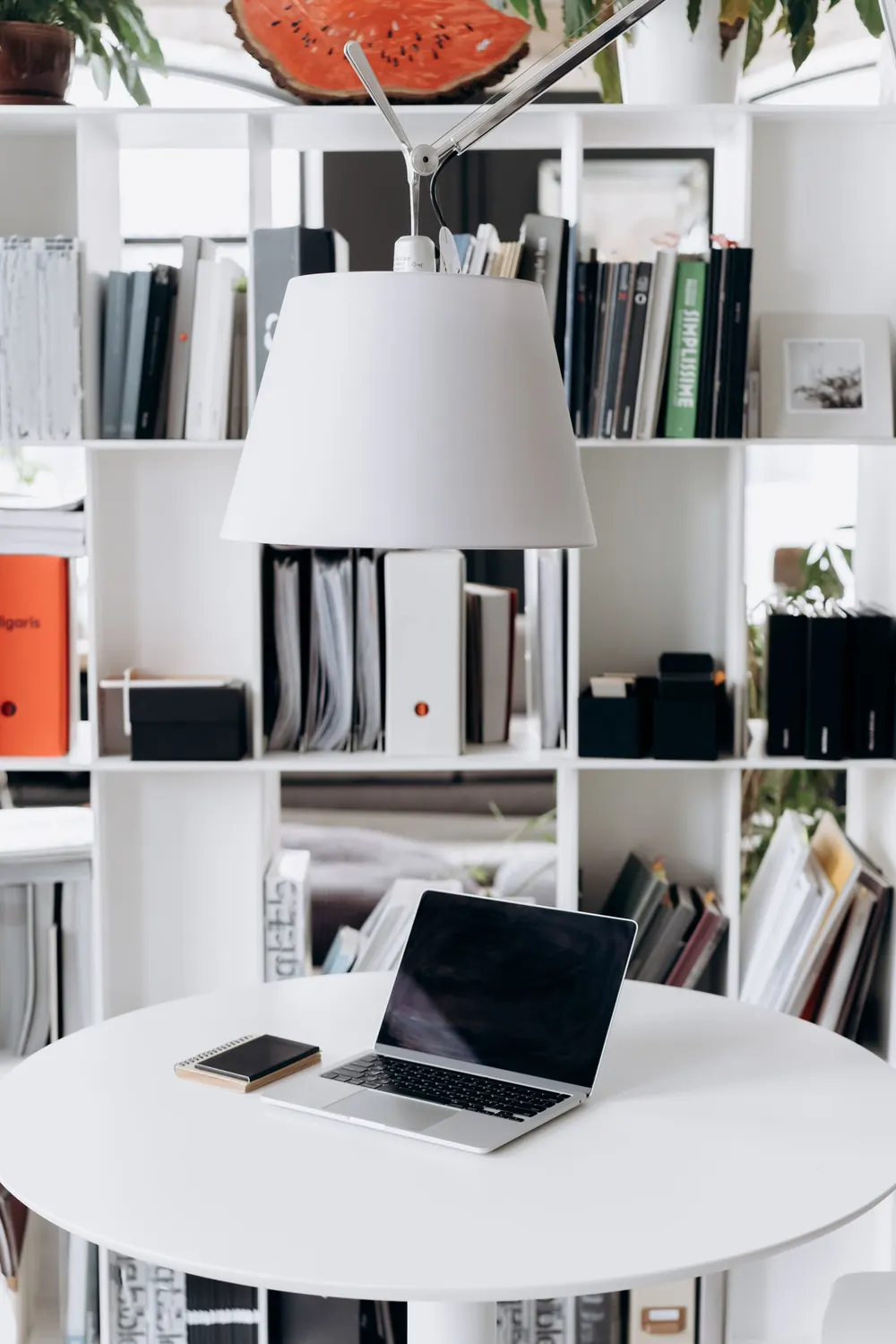
Decor only stays looking good if the room gets reset. End the day by clearing the desk tray, docking the laptop, pushing the chair in and switching the lamp off. That five-minute habit is what separates a home office that always looks ready from one that feels like unfinished work.
If the office shares space with the rest of the house, borrow calm cues from our cozy living room ideas and keep the palette consistent so the work zone does not jar against the room it sits in.
Get the Home Journal Co letter
One thoughtful email a week with our newest guides and seasonal ideas. No spam, unsubscribe anytime.
FAQ
What colours are best for a home office?
Soft neutrals, muted greens and dusty blues support focus and look good on camera. Avoid pure white that glare under LEDs, and save bold reds or oranges for small accents rather than full walls.
How do I decorate a home office for Zoom?
Light your face from the front, tidy the wall behind you, hang art at seated eye level and keep the desk clear except for a lamp and one personal object. Test the camera view before important calls.
What size rug should go under a desk?
Choose a rug large enough that the chair stays on it when rolled back about 24 inches. For a typical desk setup, that often means at least 5 by 8 feet.
How can I make a closet office feel finished?
Paint the interior a soft colour, add a desk that fits the full width, mount a light and a shelf at eye level, and use a curtain or doors you actually close at the end of the day so the work disappears.
Save this guide for later — this image is sized for pinning.
Some posts may contain affiliate links; see our disclosure. Photography: Ann Hannes; minhphuc .workspace; Melike B; Pixabay; Pexels User; Callum Hilton; George Milton; Eline Spee; Tina Simakova; Mikhail Nilov; Hakim Santoso; Gökhan Yetimova; Enes Çelik via Pexels.