Gallery Wall Ideas: Layouts, Heights and Spacing That Look Curated
Gallery wall ideas with exact measurements: choosing a layout, the right height and spacing, mixing frames and art, planning with paper templates, hanging without extra holes, and the best walls for a gallery wall in living rooms, hallways and stairs.
A gallery wall turns a blank wall into the most personal part of a room. It can hold family photos, prints, postcards and children's drawings in one arrangement. The difference between a gallery wall that looks curated and one that looks random comes down to three numbers: overall size, centre height and the gap between frames. This guide covers those numbers, the main layouts and a hanging method that avoids extra holes.
Choose the right wall
The best walls for a gallery are ones you see often but do not need for anything else: above a sofa, along a hallway, up a staircase, above a sideboard or beside a dining table. Avoid walls in direct sun, which fades prints, and walls above radiators, which can warp paper.
Get the size right
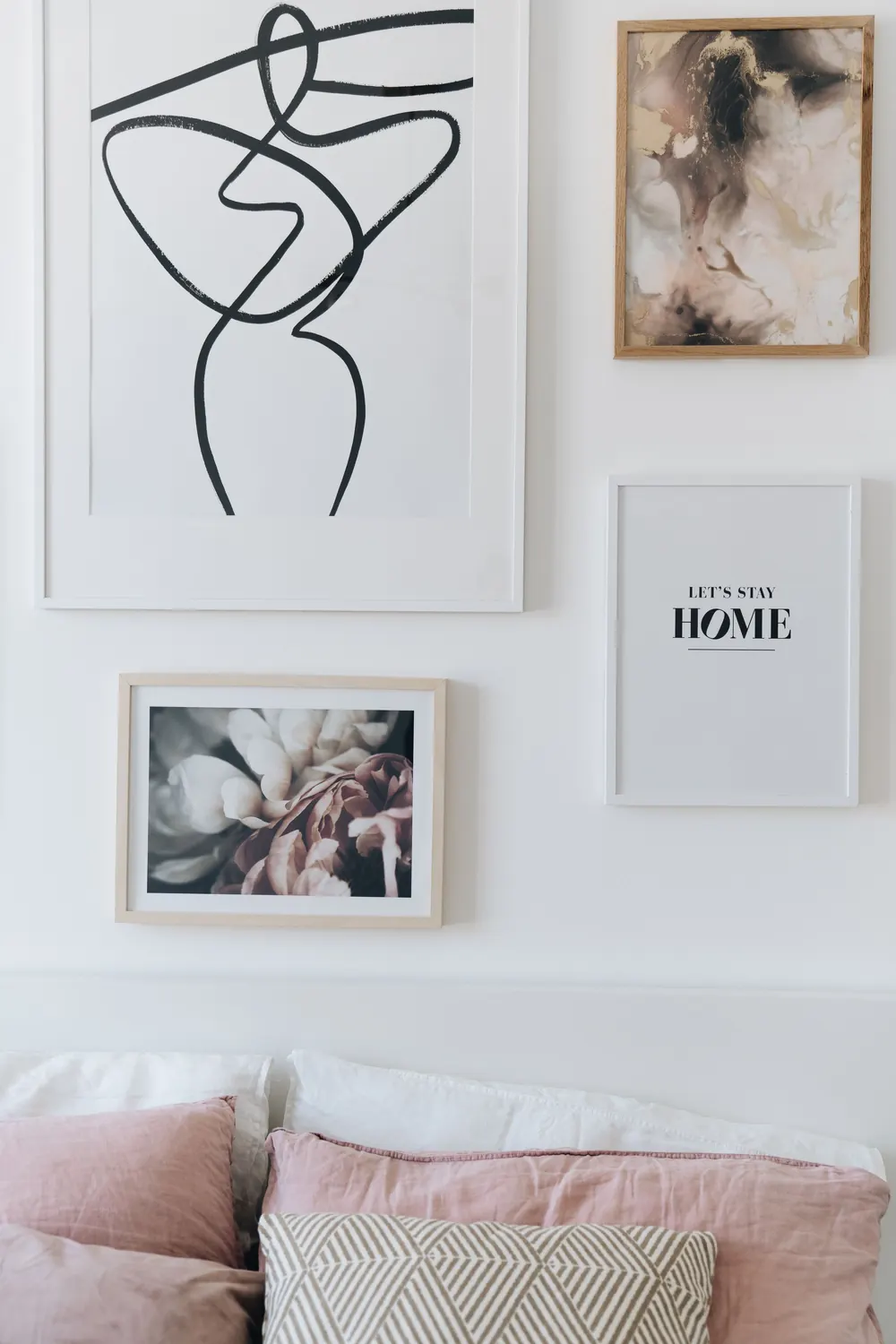
Above furniture, the gallery should cover about two-thirds of the width of the piece below. Over a 210 cm (83 in) sofa, aim for a gallery about 140 cm (55 in) wide. On an empty wall, leave at least 30 cm of clear wall at each side so it does not look crammed.
Height and spacing
- Centre height: the middle of the whole arrangement should sit at about 145 to 150 cm (57 to 60 in) from the floor, which is roughly eye level.
- Above furniture: leave 15 to 25 cm (6 to 10 in) between the top of the sofa or sideboard and the bottom row of frames.
- Gap between frames: keep it consistent at 5 to 8 cm (2 to 3 in). Consistent gaps are what make mixed frames look like one piece.
Pick a layout
- Grid: identical frames in rows and columns. Calm and formal, ideal for a series of prints or black and white photos.
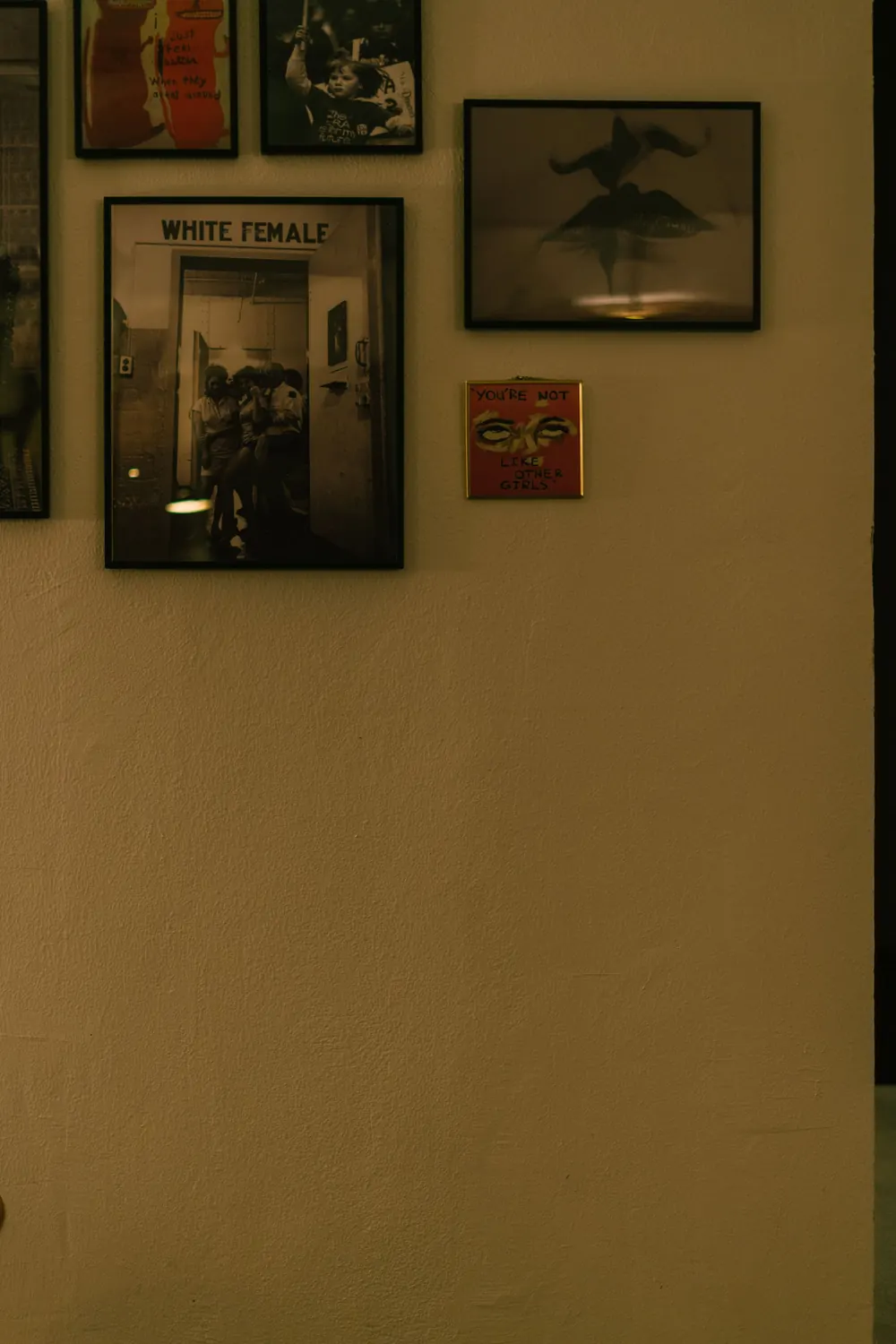
- Salon or organic: mixed sizes and shapes arranged around one large anchor piece. Relaxed and easy to add to over time.
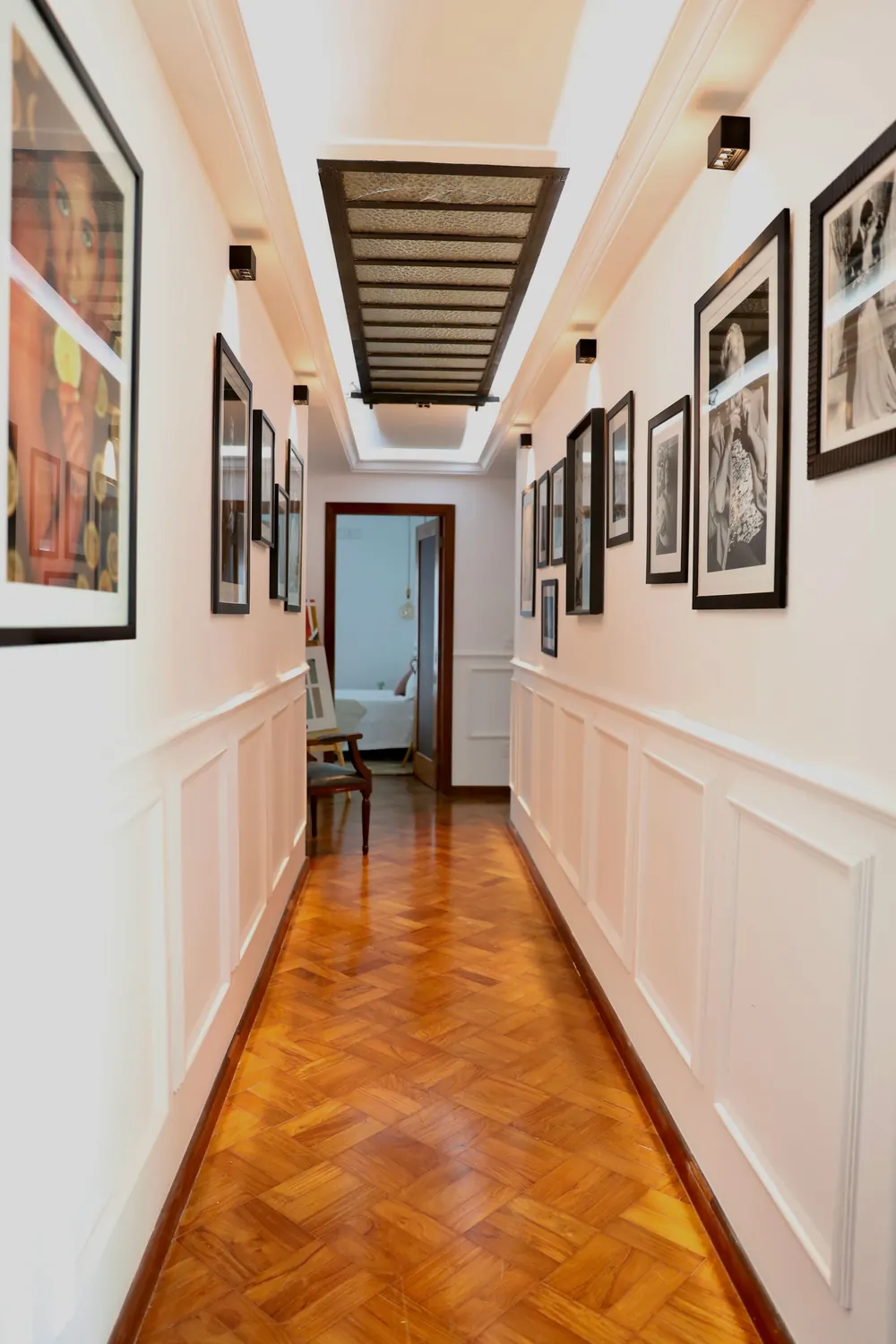
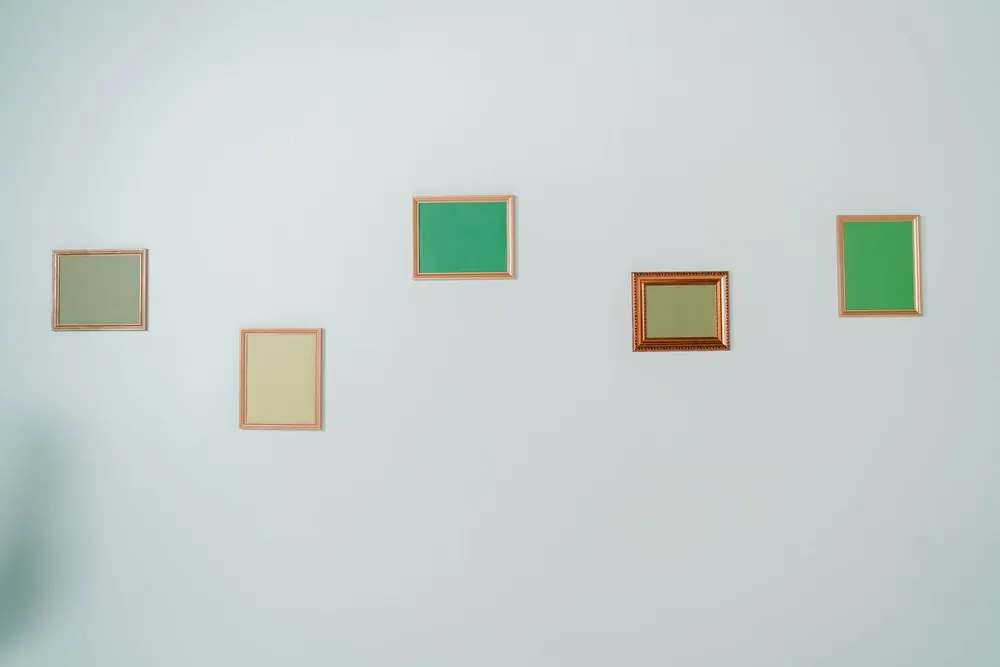
- Centre line: frames of different heights all centred on one invisible horizontal line. Good for long hallways.
- Ledge: frames leaning on one or two picture shelves. Perfect for renters and people who like to change art often.
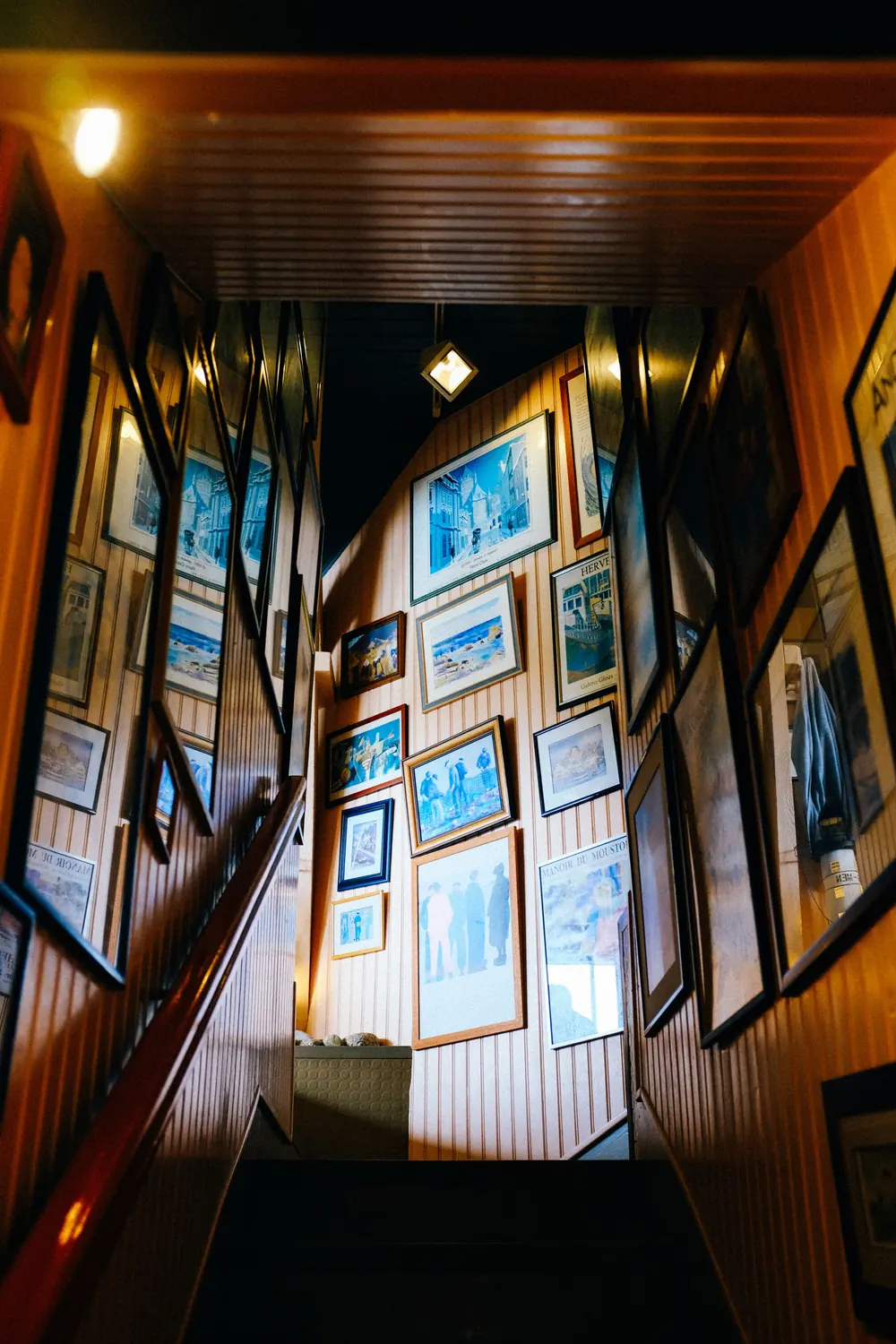
- Staircase: frames climbing parallel to the stair rail, keeping the same height above each step.
Mix frames and art with a plan
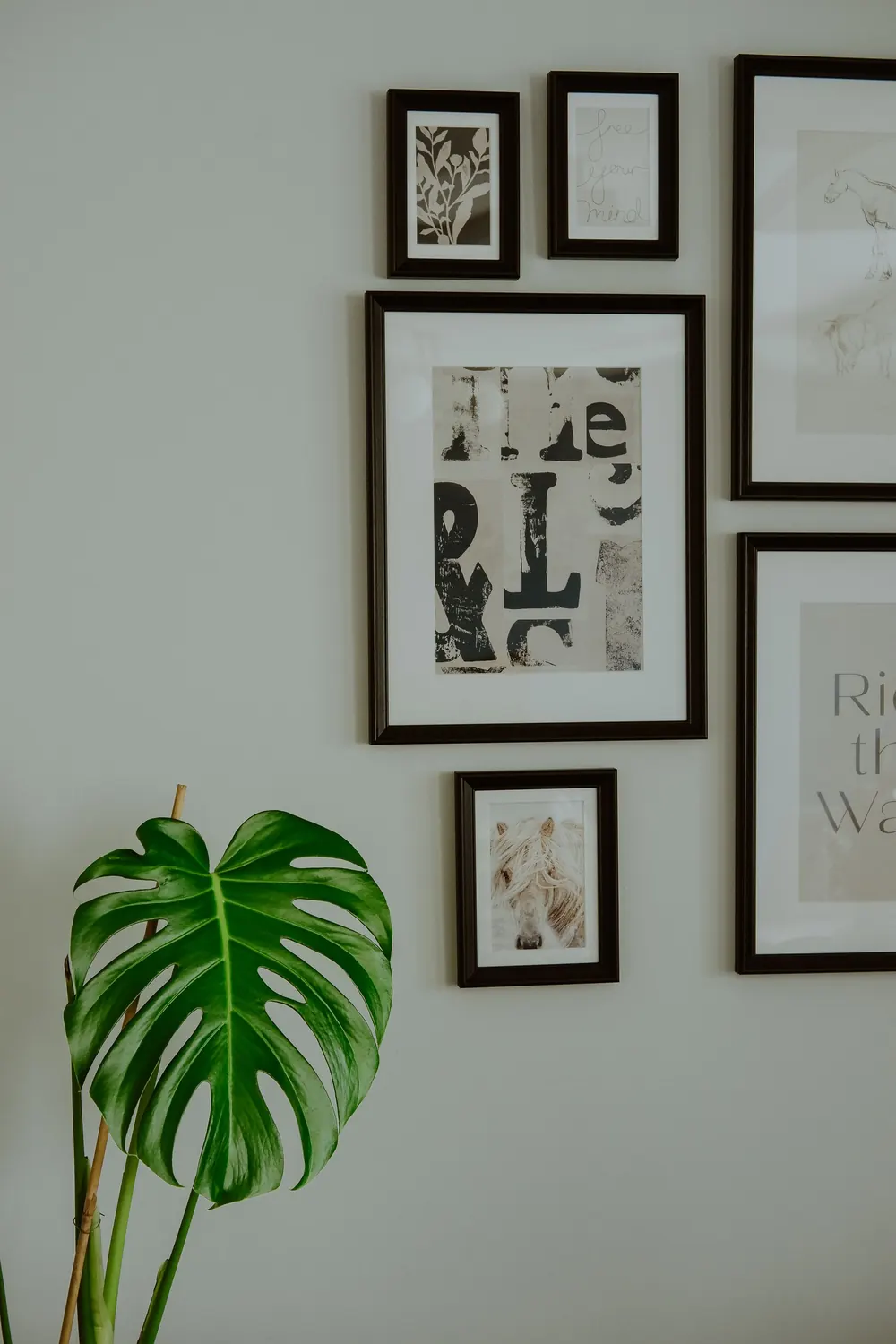
For a cohesive look, keep one thing constant. That can be the frame colour (all black, all oak or all brass), the mount (all with white mounts), or the art palette (black and white photos, botanical prints or a set of colours).
Start with one anchor piece, usually the largest, and build around it. Mix portraits and landscapes, and add one or two non-frame items such as a small mirror, a woven plate or a wall hook, for texture. An odd number of pieces, such as 5, 7 or 9, is easier to balance than an even number.

Plan on paper first
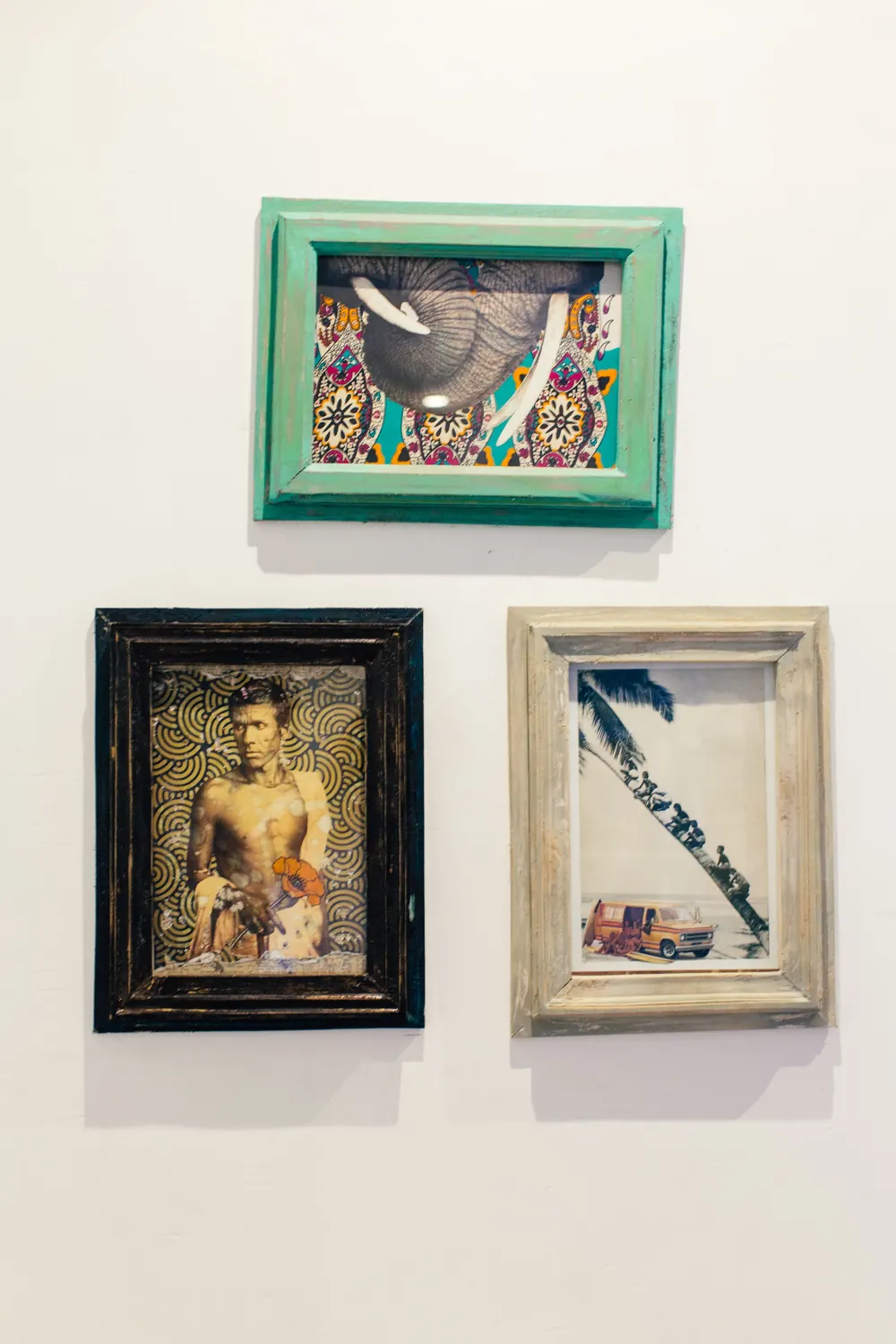
Trace every frame on kraft paper or old wrapping paper and cut it out. Mark the hanging point on each template: measure from the top of the frame to the taut wire or hook. Stick the templates to the wall with painter's tape and live with the arrangement for a day. Adjust until it looks balanced, then take a photo for reference.
Hang it without extra holes
Drive the nail or hook through the mark on each paper template, then tear the paper away. Use a level on each frame and add small bumpers or removable strips on the bottom corners to stop frames shifting. For heavy frames over 5 kg, use wall anchors or picture hooks rated for the weight, and on plasterboard use a stud finder where possible.
Renters can use removable picture-hanging strips for light frames or a picture rail with hanging cords, which needs only a few holes.
Room-by-room ideas
- Living room: a salon wall above the sofa with family photos, travel prints and one mirror.
- Hallway: a centre-line row of matching frames that leads the eye to the next room.
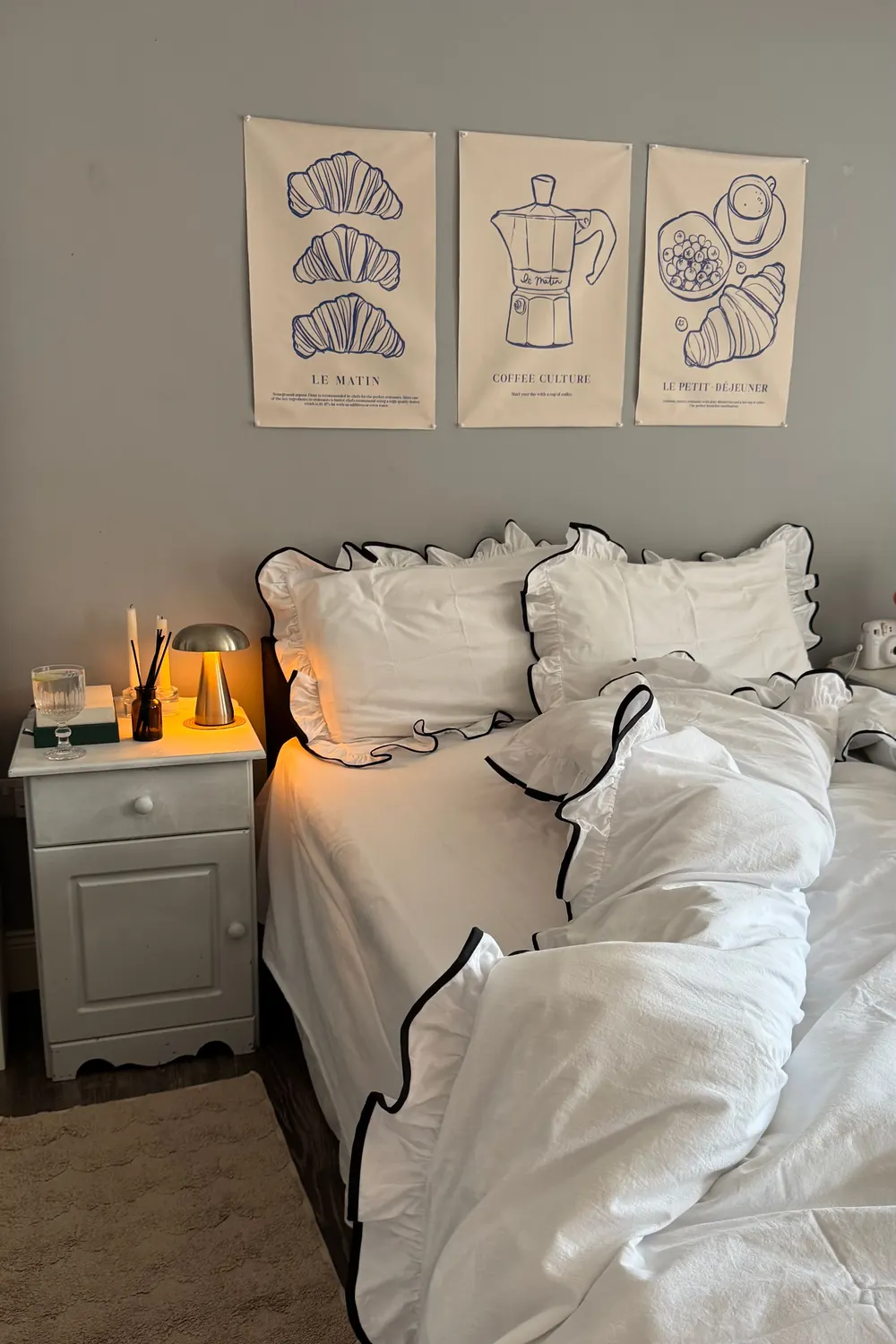
- Bedroom: a small grid of four or six calm prints above the headboard, hung high enough to clear it.
- Kitchen or dining: vintage food prints, plates and a small clock.
- Kids' room: a ledge of frames for drawings that are easy to swap.
Get the Home Journal Co letter
One thoughtful email a week with our newest guides and seasonal ideas. No spam, unsubscribe anytime.
FAQ
How high should a gallery wall be hung?
Centre the whole arrangement at about 145 to 150 cm from the floor, or leave 15 to 25 cm between furniture and the bottom row.
How far apart should frames be?
Keep a consistent gap of 5 to 8 cm between all frames.
Do all frames have to match?
No, but keep one element consistent, such as frame colour, mount or art palette, so the wall looks like one piece.
How many pieces do I need for a gallery wall?
Five to nine pieces suit most walls above a sofa. Start smaller and add over time with an organic layout.
Save this guide for later — this image is sized for pinning.
Some posts may contain affiliate links; see our disclosure. Photography: Sami Abdullah; alleksana; Beyzaa; Flávia Vicentini; Adrien Olichon; Emre Can Acer; Rachel Claire; cottonbro studio; Marcelo Dias; Matheus Bertelli via Pexels.