Living Room Shelf Decor Ideas: How to Style Shelves That Look Collected
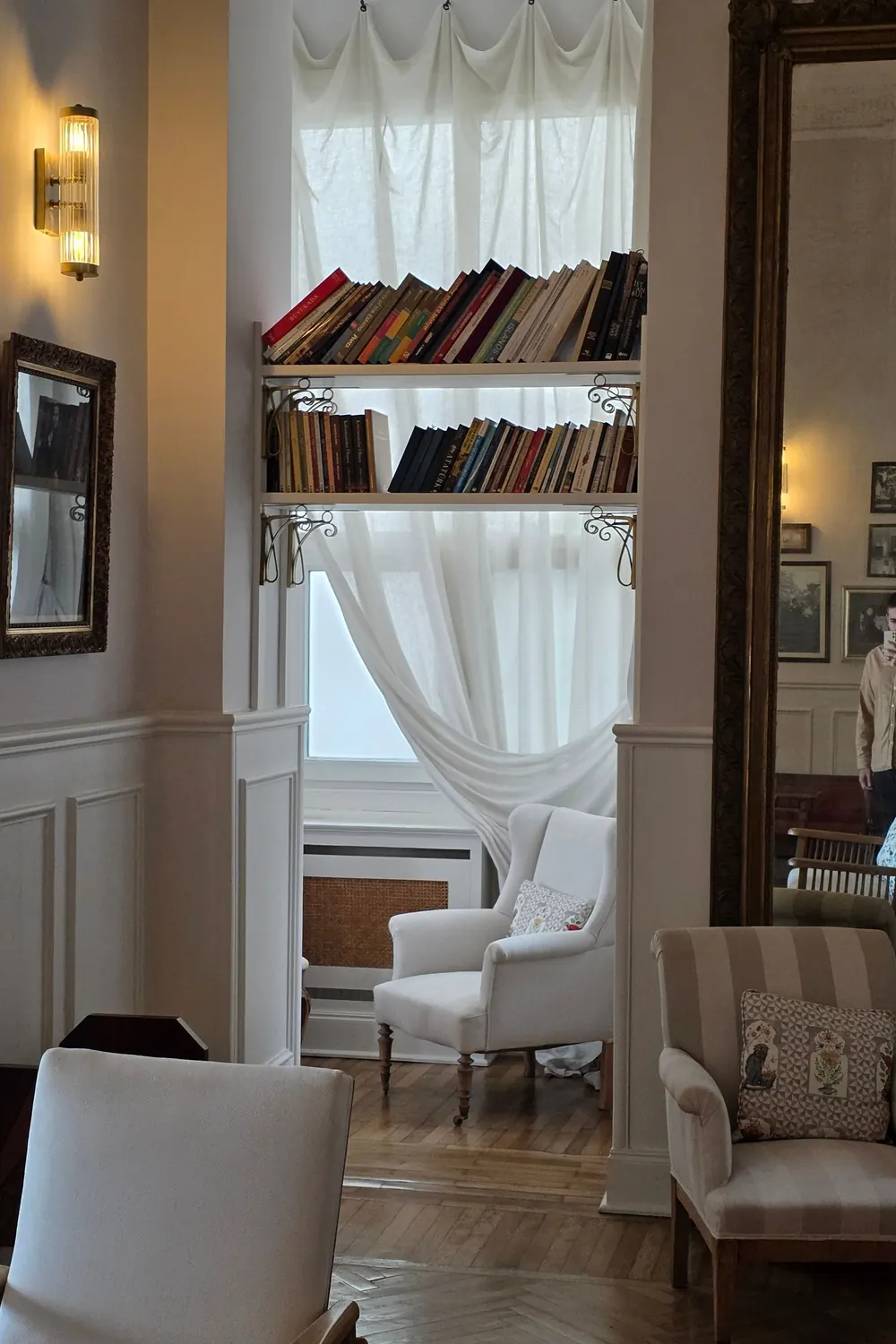
Living room shelf decor ideas that look collected, not staged: how to mix books, objects and negative space, balance tall and low pieces, style open shelves and bookcases, and keep a lived-in room looking calm from the sofa.
Open shelves can make a living room feel personal or make it feel like a shop display that never got edited. The difference is rarely the furniture. It is how you group objects, how much empty space you leave, and whether the shelves support the way you actually live. These living room shelf decor ideas focus on collected styling you can maintain, not a one-day photoshoot that falls apart when you put the remote down.
Decide what the shelves are for
Before you buy another vase, decide the job of each shelf run. Some shelves are mostly books. Some are a mix of books and objects. A few, like a media unit shelf, need to hide remotes and routers while still looking calm.
Write a short list for each unit: display, storage, or both. When a shelf tries to do everything, it usually looks busy. Our cozy living room ideas guide pairs well with this approach if you are also rethinking seating and lighting.
Use the triangle rule for height
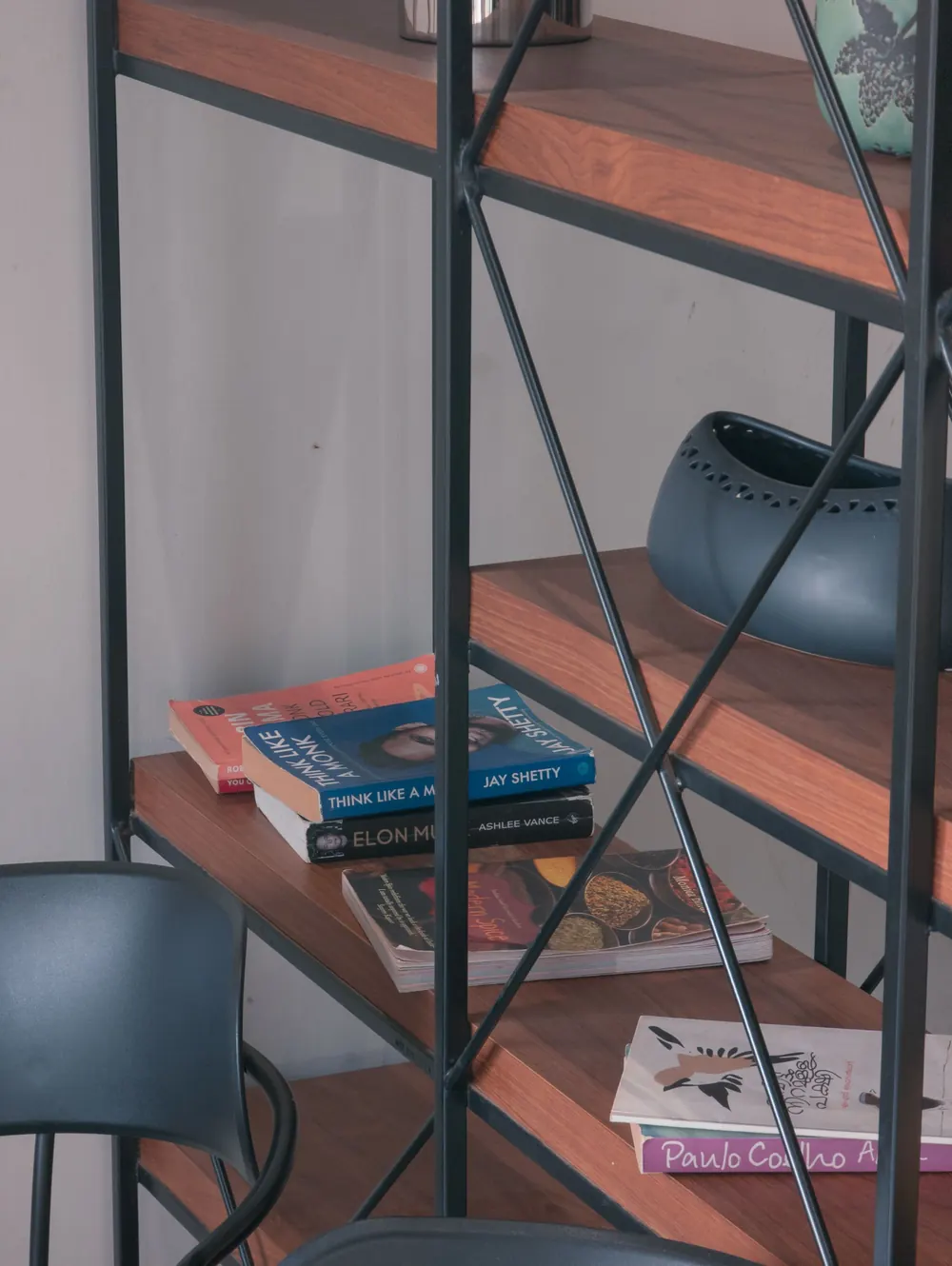
The fastest way to style a shelf is to build small triangles of height. Pair a tall object (a lamp, stacked books on end, a branch in a vase) with a medium piece and a low tray or bowl. Your eye travels across the group instead of scanning a flat row of same-height items.
Repeat that pattern loosely along the shelf rather than forcing a perfect mirror image. Symmetry works on a mantel; shelves look more collected when the rhythm is similar but not identical left to right.
Mix books vertically and horizontally
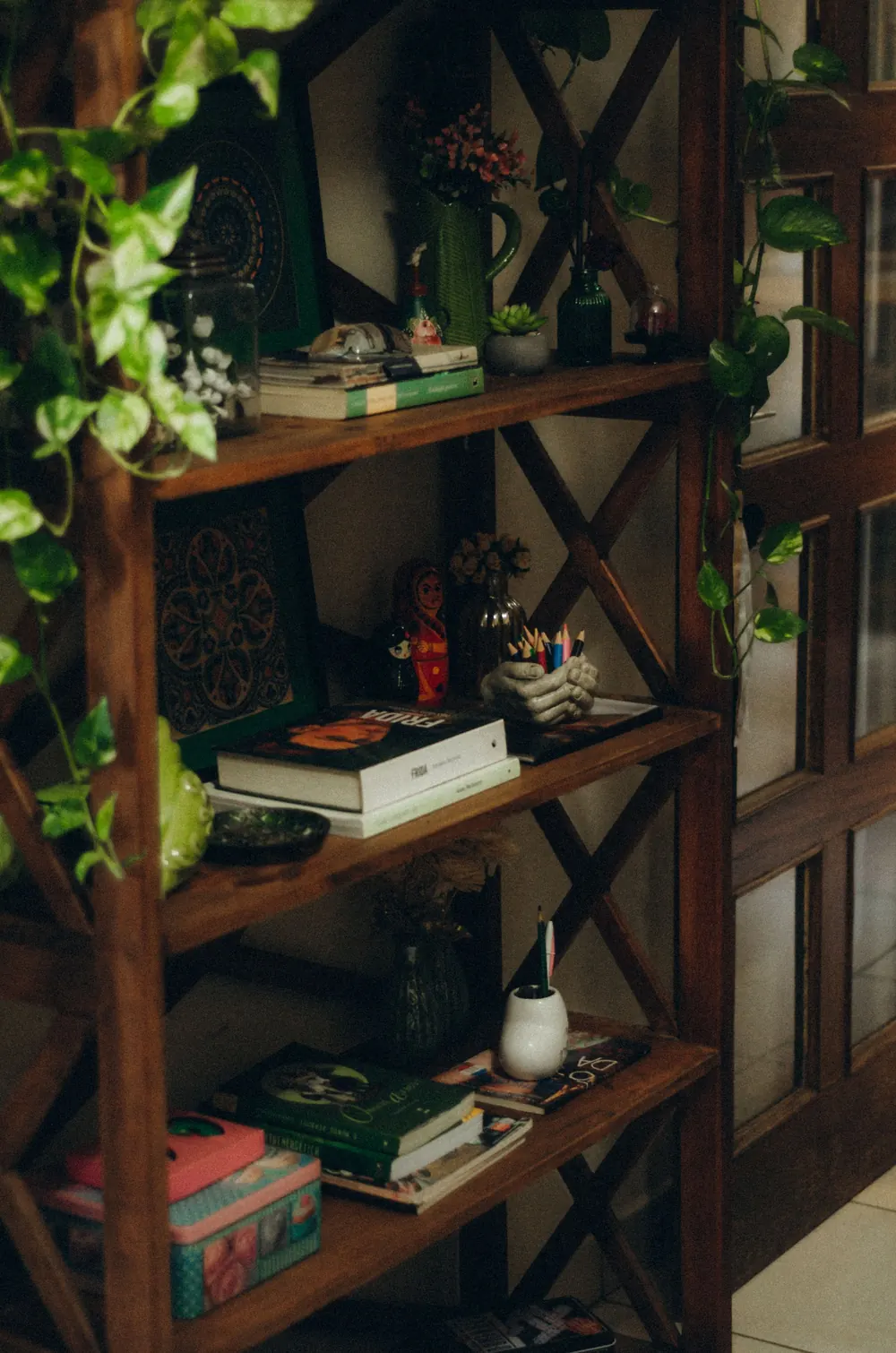
All-vertical books look tidy and a little stiff. All-horizontal stacks look like you ran out of room. Alternate: a vertical run, then a stack of two or three books used as a plinth for a small object, then another vertical group.
Pull some books forward to the edge of the shelf and leave others slightly back so the line is not perfectly flush. Remove torn dust jackets if the cloth bindings are nicer. Keep the colours of spines roughly related to your room palette so the wall of books does not fight the sofa.
Leave breathing room
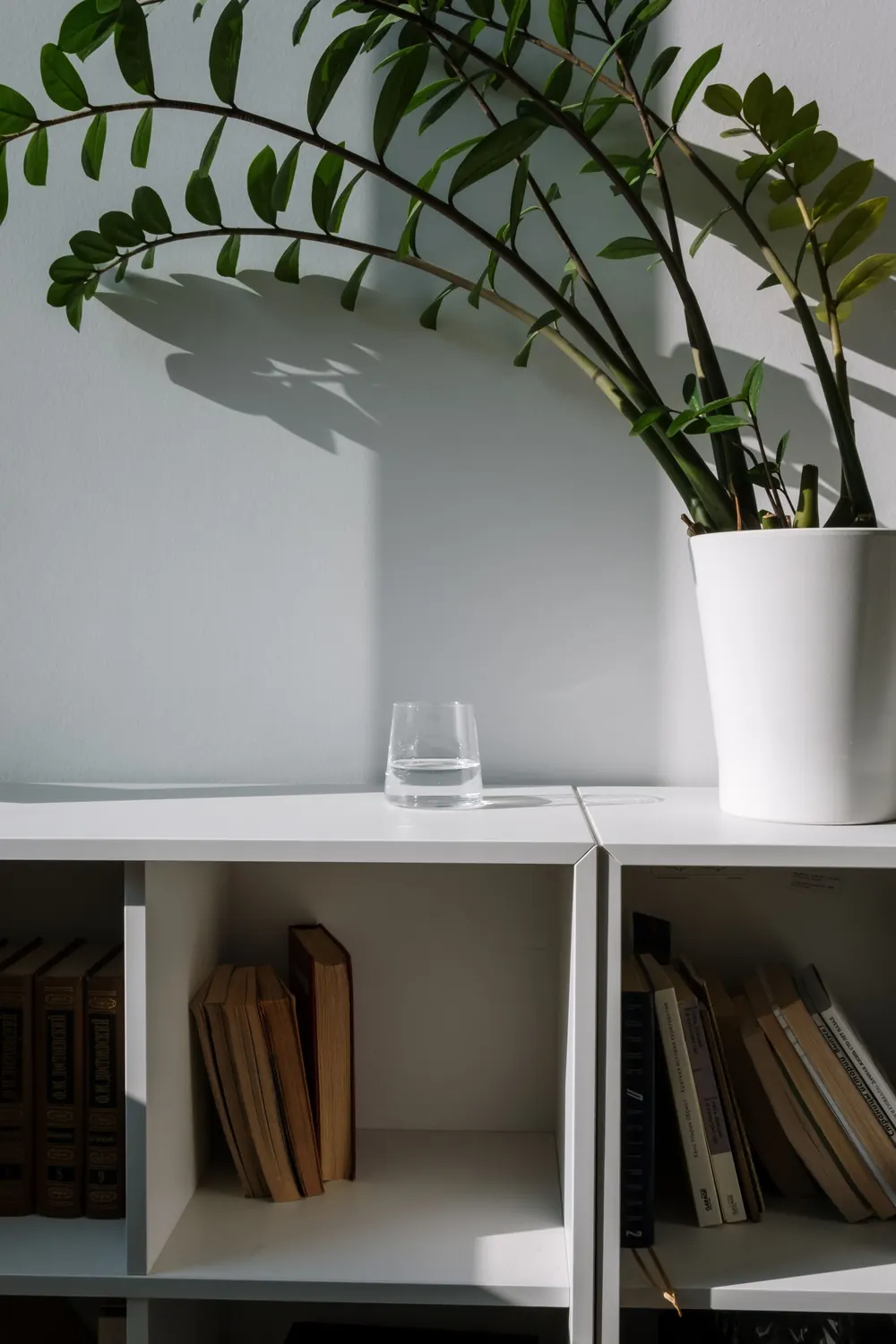
Negative space is part of living room shelf decor, not a failure to fill. Aim to leave about a third of each shelf visually quiet. That might mean empty wood, a single low bowl, or a gap between two clusters.
If every inch is occupied, even beautiful objects start to look like clutter from the sofa. Edit one shelf at a time: take everything off, put back only what you love or use, then stop while it still feels slightly sparse.
Group in odd numbers
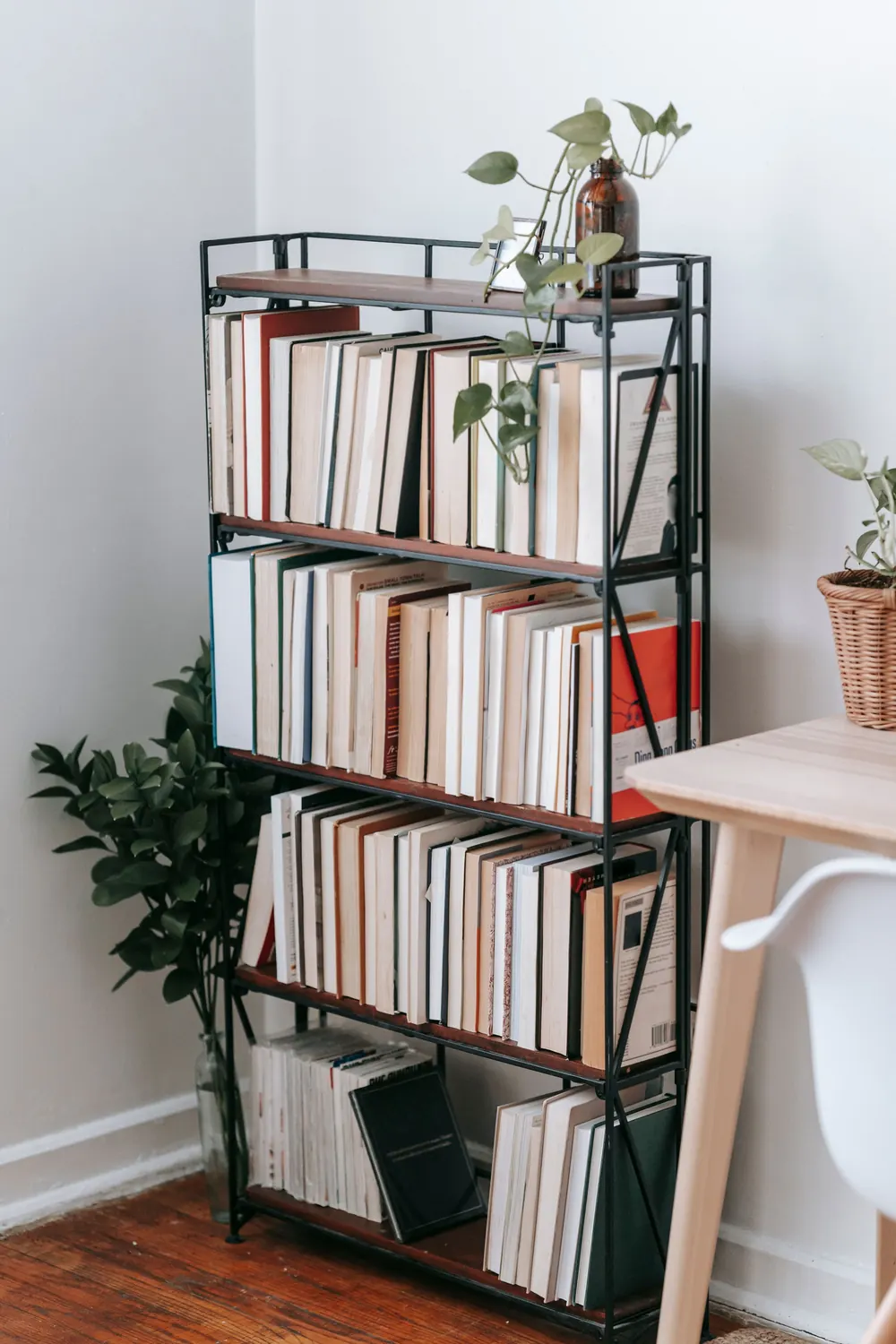
Three objects usually look better than two or four. A candle, a small sculpture and a tiny plant; or a vase, a framed photo and a bowl of matches. Keep the materials mixed: ceramic next to wood next to glass or metal so the group has texture.
Avoid lining up five candlesticks of the same height. Vary scale inside the group, and repeat a material elsewhere on the shelf so it feels intentional.

Style the top of a bookcase
The crown of a tall bookcase is often ignored or overloaded with leftover baskets. Treat it like a second mantel: one or two larger pieces, a plant that can handle the height, or a pair of framed prints leaning casually.
Keep weight safe. Heavy ceramics belong on lower shelves. If children or pets bump the unit, anchor the bookcase to the wall before you style the top.
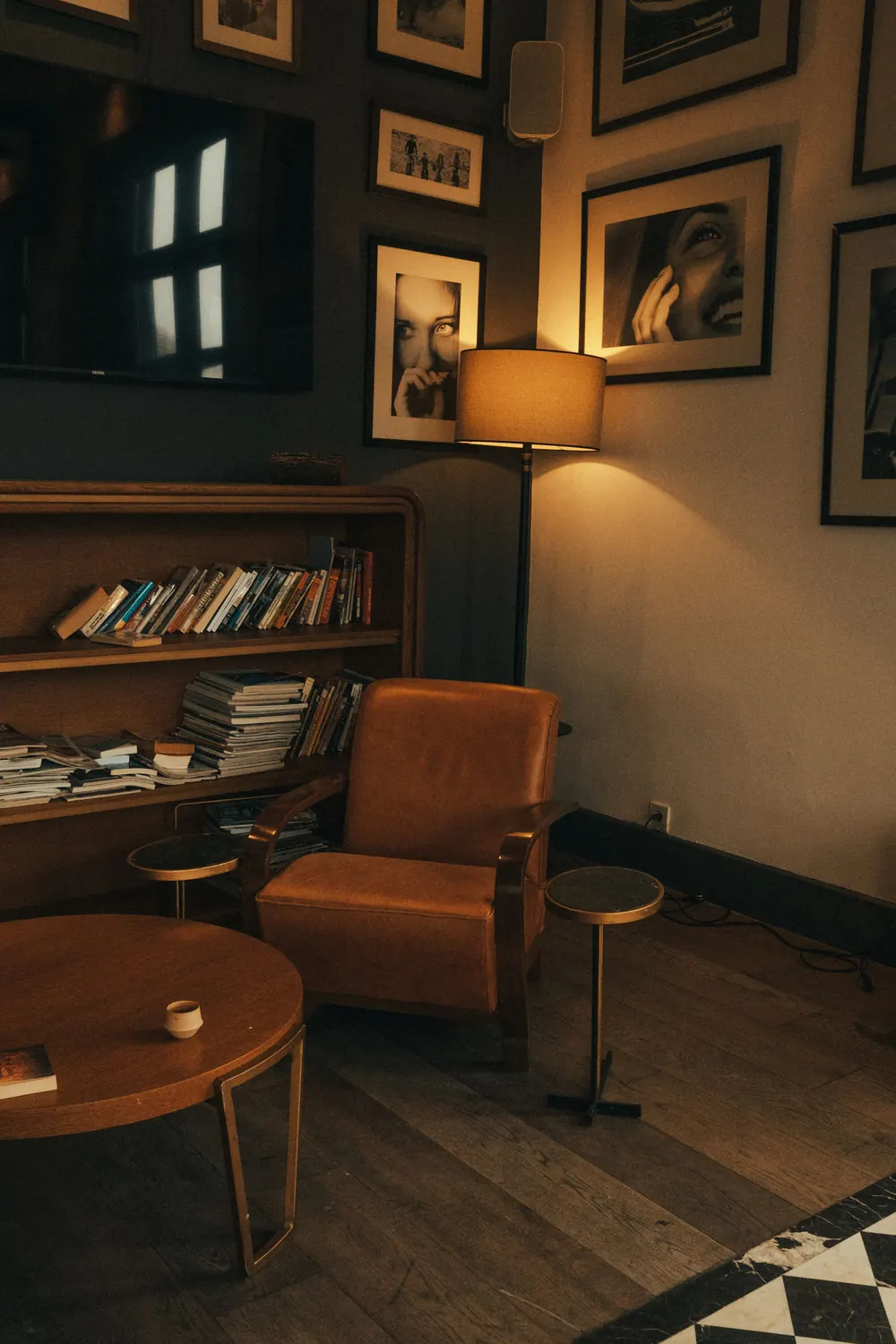
Hide the useful ugly things
Living rooms need remotes, chargers, coasters and the occasional game controller. Use lidded boxes, shallow baskets and a tray with a lip so daily clutter has a home that still looks designed.
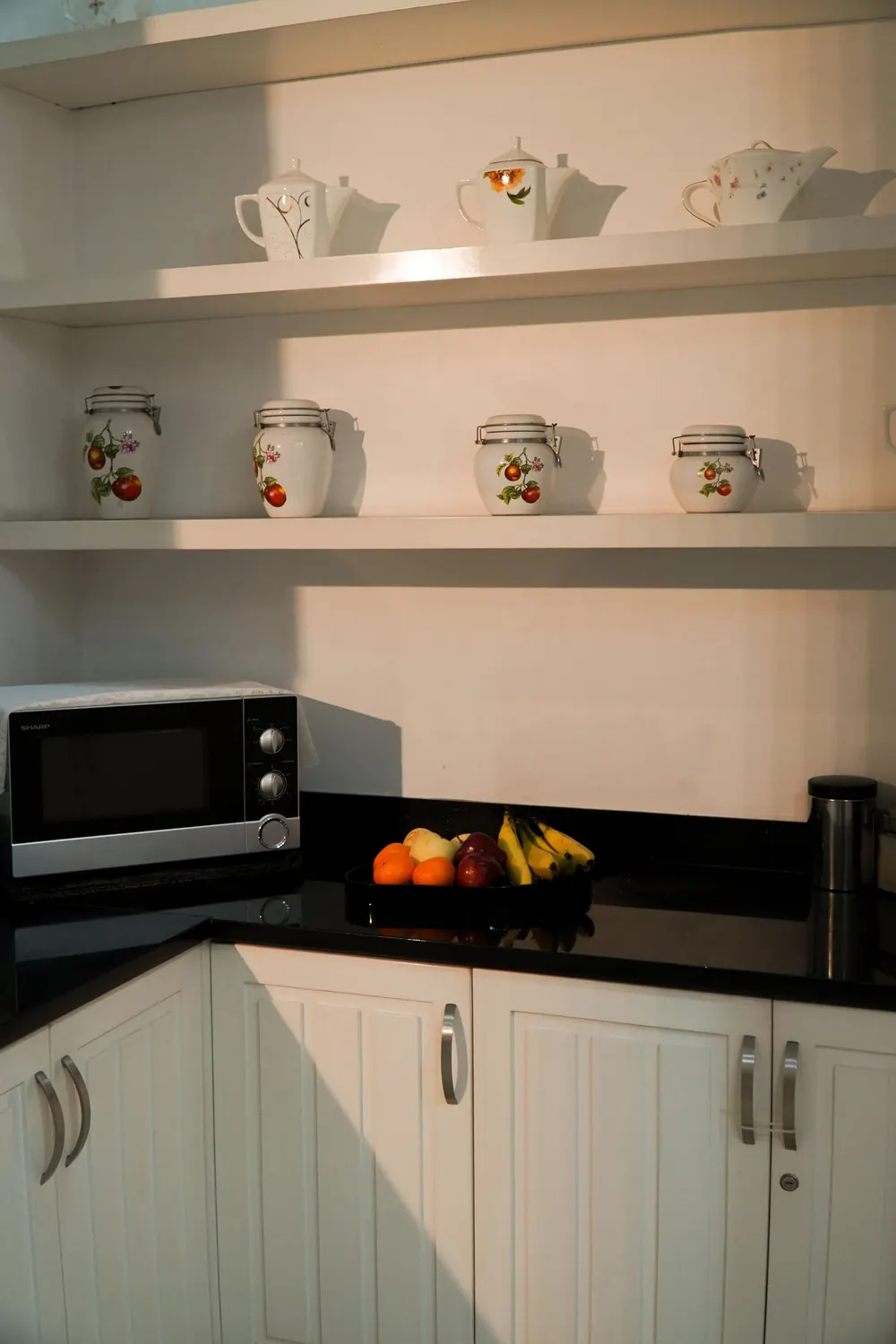
One closed box per shelf is enough. If you need more storage, that is a signal to add a cabinet or a sideboard rather than more open shelving. For kitchen open shelves that face a living area, the same edit-and-box habit applies; see our kitchen decor ideas for counter and shelf pairing tips.
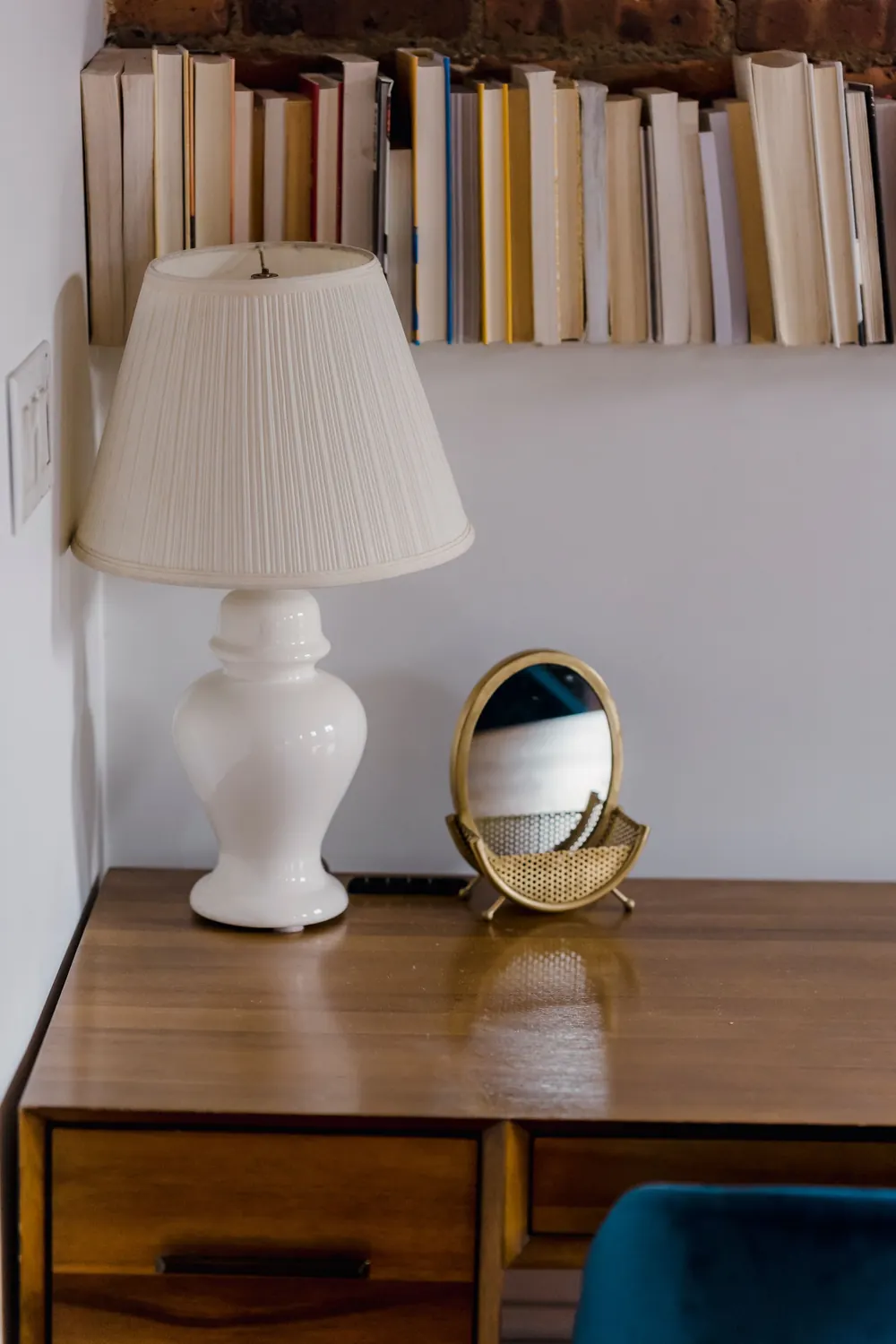
Plants, art and personal pieces
A trailing plant softens hard shelf lines, but only if you will water it. Choose tough plants for high shelves and keep saucers under pots. Small framed art or a postcard in a stand adds a layer without needing wall hooks.
Personal pieces, a travel find, a child’s clay pot, a vintage camera, are what make shelves look collected. Limit yourself to a few and give each one space. A wall of souvenirs reads as storage, not styling.
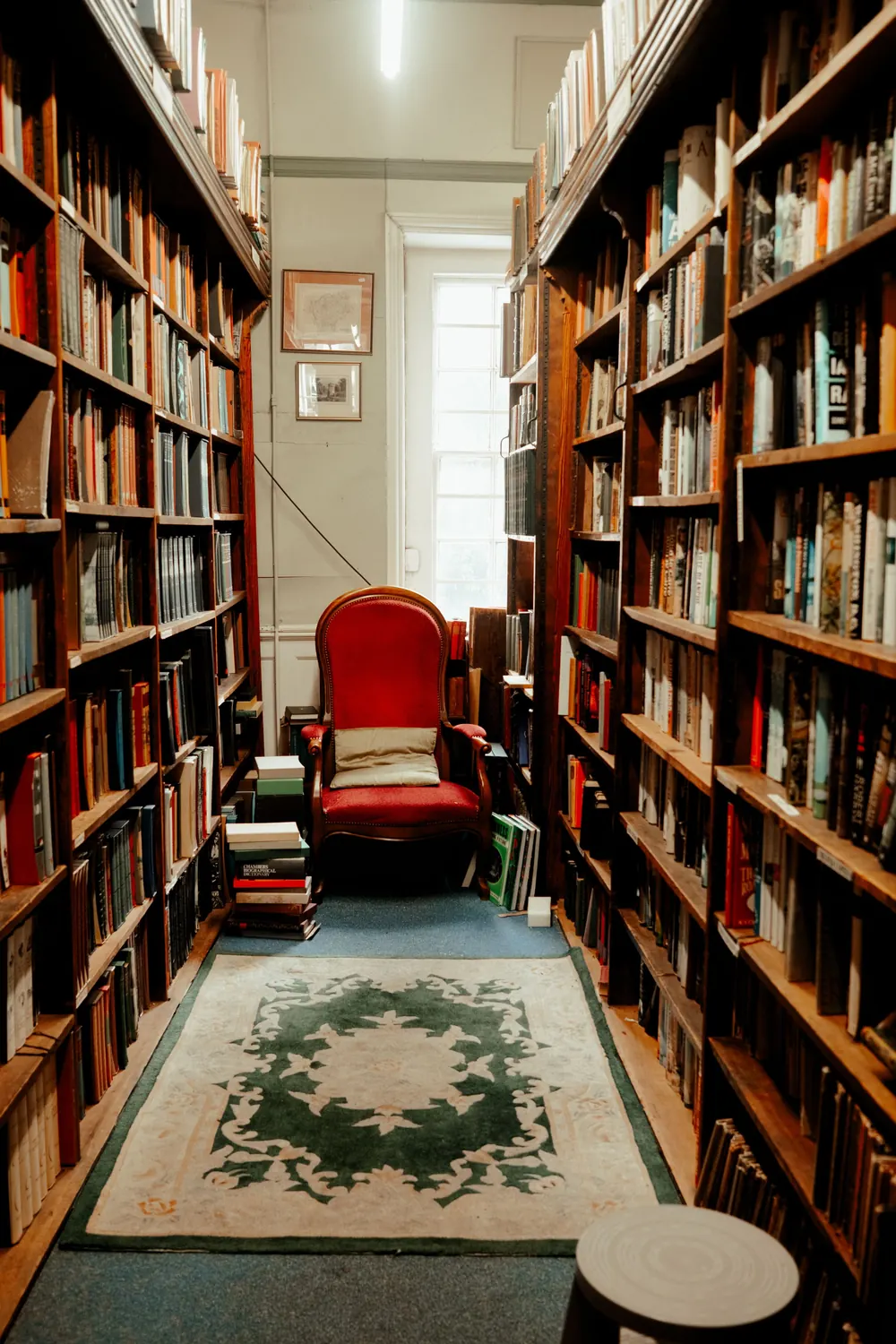
Colour and material palette
Pick two or three materials to repeat: oak and linen, black metal and cream ceramic, rattan and stoneware. Then add one accent colour that already exists in the room, a cushion, a rug detail, a lamp shade.
All-white objects on light wood can look washed out under warm lamps. A little contrast, a dark vase or a stack of deeper book spines, keeps the shelf readable in evening light.
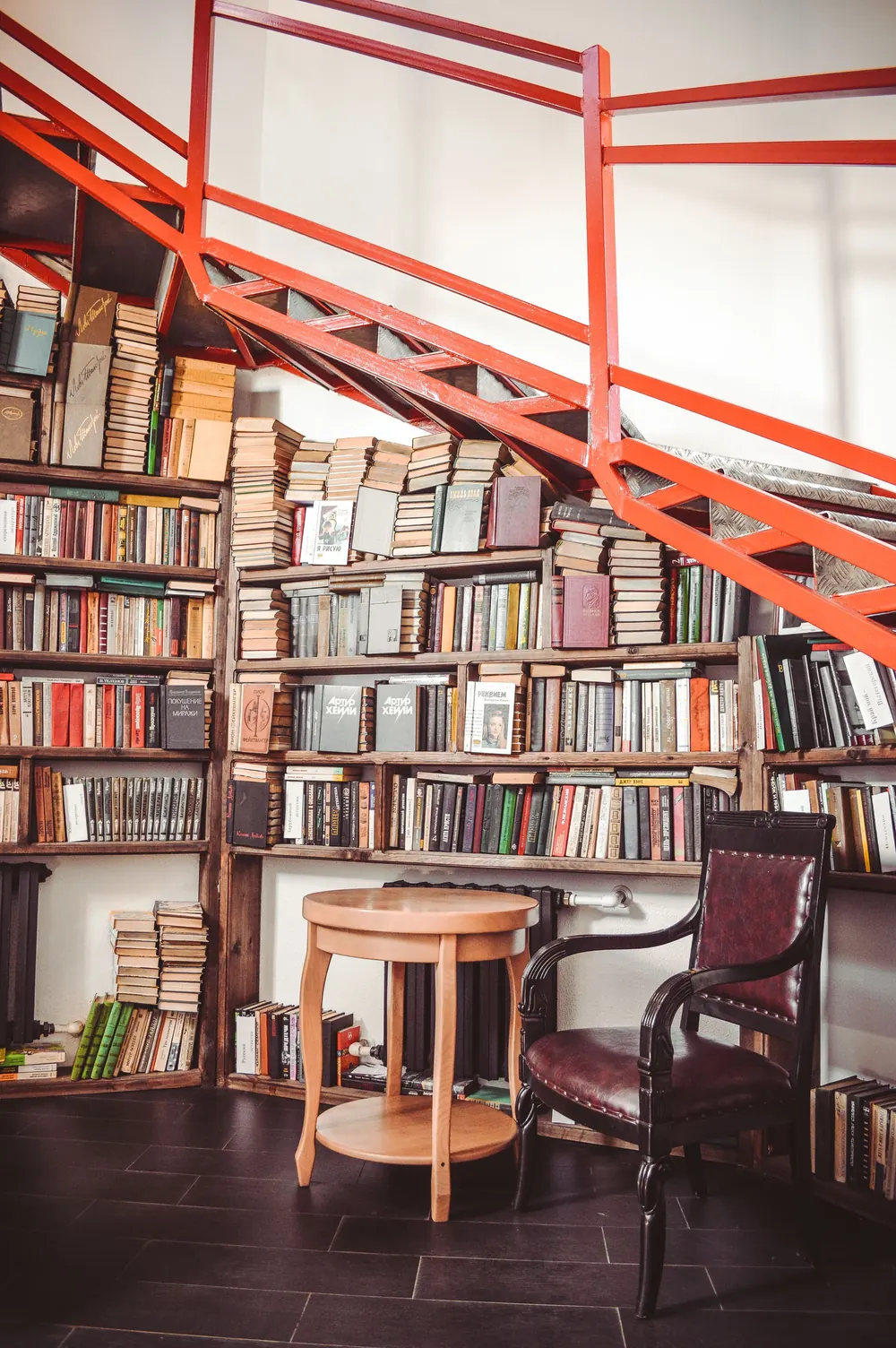
A reset routine that keeps shelves looking good
Once a month, spend ten minutes per shelf: dust, restack leaning books, throw away dried flowers, and remove anything that migrated there from another room. Collected style only works if the baseline stays edited.
When you bring something new home, swap it for an object that leaves, rather than squeezing it into a full shelf. That one-in, one-out rule does more for living room shelf decor than any shopping list.
Get the Home Journal Co letter
One thoughtful email a week with our newest guides and seasonal ideas. No spam, unsubscribe anytime.
FAQ
How do I make shelf decor look expensive on a budget?
Use books you already own, thrifted ceramics, and one or two larger pieces instead of many small ones. Empty space and consistent colour matter more than brand names.
Should living room shelves match the coffee table styling?
They should share a palette and a couple of materials, not identical objects. If the table has a tray and candle, let the shelves carry books and taller pieces so the room has variety.
How many plants can I put on open shelves?
One or two per bookcase is usually enough. More turns into a watering chore and a drip risk over books and electronics.
What do I put on shelves above a sofa?
Keep objects lightweight and set back from the edge. Avoid glass that can fall, and leave clear space so people do not bump hanging art or plant trails when they sit.
Save this guide for later — this image is sized for pinning.
Some posts may contain affiliate links; see our disclosure. Photography: Arda Kaykısız; Regulus Photography; Diego Bispo; cottonbro studio; George Milton; viewofbeth; Sami Aksu; Tim Samuel; K; Vika Glitter; Rachel Claire; Đặng Thanh Tú; Ayşenur YILDIZ via Pexels.